
Cold weather has a way of forcing decisions fast. A furnace breaks down during a January cold snap, or repair bills keep stacking up every winter, and suddenly you are asking a question you hoped to avoid. Do you fix it again, or is it time to move on? In Sussex County, that choice is rarely as simple as age alone.
Deciding whether to repair or replace a furnace means weighing short term repair risk against long term cost, reliability, and safety. It is not about brand loyalty or sales pressure. It is about understanding how often the system is failing, what those failures signal, and how much confidence you can realistically expect from it going forward.
For Sussex County homeowners, local factors matter. Coastal humidity, fluctuating winter temperatures, and a large number of older homes all affect furnace wear differently than colder inland regions. That is why national rules of thumb often fall apart here. This guide breaks down how to make the decision based on real risk, cost trajectory, and performance in Delaware homes, so you can avoid surprises when you need heat the most.
Why Furnace Repair vs Replacement Decisions Go Wrong
Most homeowners do not make the wrong furnace decision because they lack information. They make it because the decision gets delayed, simplified, or emotionally charged at the wrong moment. In Sussex County, where winter failures tend to cluster around cold snaps, those mistakes compound quickly. This section explains the three patterns that most often lead to regret and higher long-term costs.
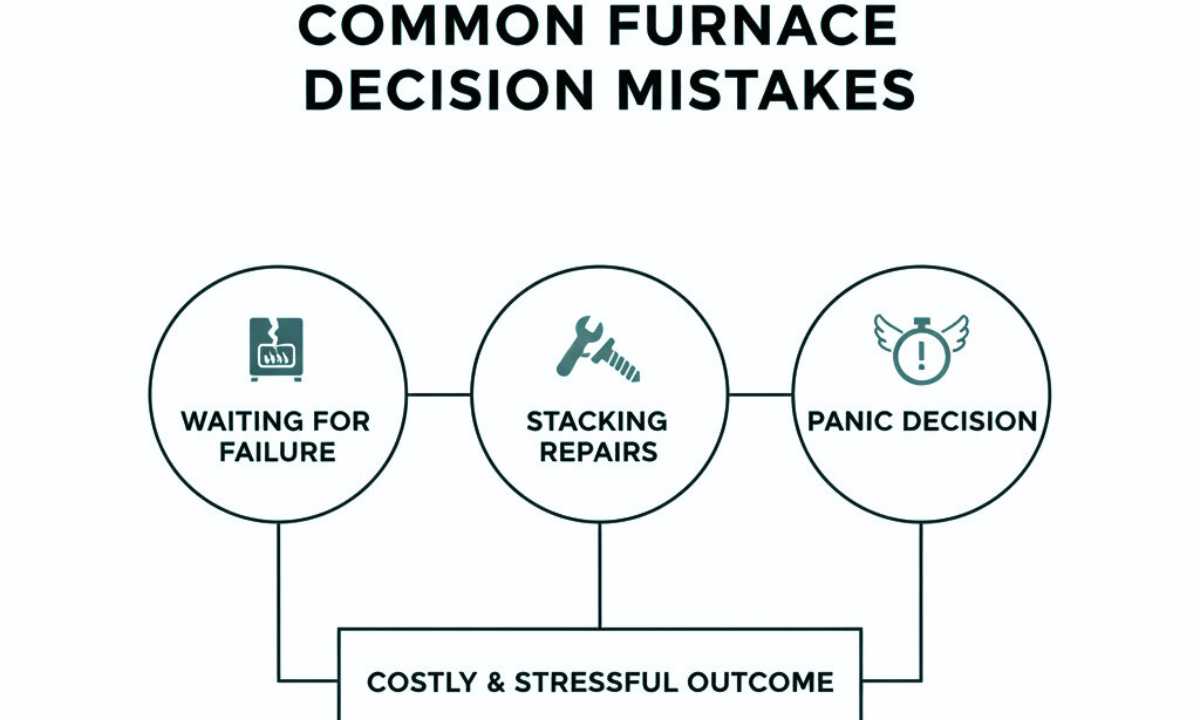
Delaying the Decision Until the Furnace Fails
Waiting until a furnace completely fails feels reasonable, especially if it has limped through previous winters. The problem is that failure almost never happens at a convenient time.
Emergency replacements limit your options. When a system dies during a cold snap, availability becomes the priority, not fit. Homeowners are often forced to choose from what is in stock locally rather than what best matches the home.
Winter installs also cost more. Labor schedules tighten, overtime becomes common, and temporary heating may be required. Even when the equipment price is similar, total installed cost during peak winter demand is often higher than planned replacements done in milder months.
Confusing Short-Term Repair Savings With Long-Term Cost
Many repair decisions are driven by the thought that fixing the furnace is cheaper than replacing it. In isolation, that is often true. Over time, it is frequently not.
The “it’s cheaper now” logic breaks down when repairs start stacking. A single repair may buy time, but repeated service calls within the same heating season are a warning sign. Once a furnace reaches the point where one failure leads to another, the cost curve steepens quickly.
Repair frequency matters more than repair price. A $400 repair followed by another $600 repair a few weeks later does not just cost money. It increases the risk of a mid-season failure, which brings emergency replacement conditions back into play.
Letting Sales Pressure or Fear Drive the Call
Heating decisions are often made under stress. No heat, cold weather, and family discomfort create pressure that can distort judgment on both sides of the conversation.
Upsell anxiety is real, and homeowners are right to be cautious. At the same time, avoiding replacement purely out of fear can be just as costly as agreeing to one too quickly.
This is where objective thresholds matter more than opinions. Age of the system, repair history, heat exchanger condition, and efficiency losses provide measurable signals. When decisions are anchored to those factors instead of urgency or reassurance, outcomes are more predictable and regret drops sharply.
Most bad furnace decisions share the same root cause. They are made reactively, without clear criteria, and under time pressure. The sections that follow lay out the practical thresholds and local factors that help Sussex County homeowners decide before they are forced to.
How Long Furnaces Actually Last in Sussex County Homes
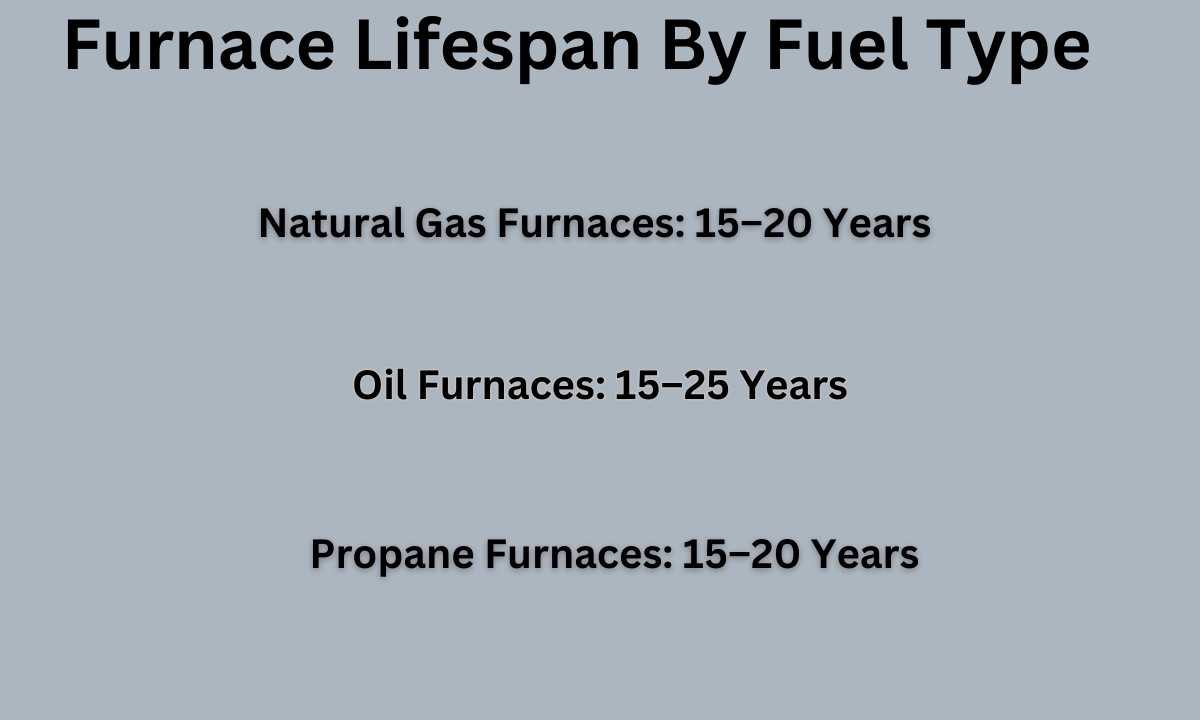
Homeowners often hear broad claims about furnace lifespan, usually framed as a simple number. In reality, furnaces in Sussex County age differently than those in colder inland regions. Coastal humidity, variable winter demand, and fuel type all shape how long a system remains reliable. This section sets realistic expectations based on local conditions, not generic national averages.
Average Furnace Lifespan by Fuel Type
Yes, furnace lifespan varies by fuel type, but those ranges only hold when maintenance and operating conditions are considered alongside age.
Natural gas furnaces in Sussex County typically last around 15 to 20 years when properly maintained. They benefit from cleaner combustion and more stable fuel delivery, which reduces internal stress over time. In neighborhoods with consistent gas supply and annual servicing, these systems often reach the upper end of that range.
Furnaces that reach the upper end of their expected lifespan in Sussex County almost always share one factor in common: consistent, documented ongoing system maintenance over many years.
Propane furnaces generally fall closer to 14 to 18 years. Propane burns cleanly, but fuel quality, tank maintenance, and delivery timing matter more. In rural or coastal areas where propane use is common, inconsistent fuel pressure or skipped maintenance can shorten usable life.
Oil furnaces can last 20 years or more, but only with disciplined upkeep. Oil systems are mechanically durable, yet they are more sensitive to soot buildup, combustion efficiency drift, and neglected servicing. Homes still running oil in Sussex County often see longevity when maintenance has been consistent from the start.
Why Coastal Delaware Shortens or Extends Lifespan
Yes, coastal conditions directly affect how long a furnace holds up, even when the equipment itself is high quality.
Humidity plays a quiet but steady role. Moisture in the air increases corrosion risk inside cabinets, venting components, and heat exchangers, especially in basements or crawlspaces. Furnaces that operate in damp environments without proper airflow or dehumidification tend to age faster.
Salt air exposure matters most in homes closer to the coast. Salt accelerates corrosion on metal components, particularly venting systems and exterior connections. This does not guarantee early failure, but it does raise the importance of inspection and proactive maintenance.
Usage patterns during Sussex County winters also influence lifespan. Winters here are variable rather than consistently cold. That leads to more cycling on and off instead of long steady run times. Frequent cycling increases wear on igniters, blowers, and control boards, which can shorten service life even when total runtime is lower than in colder regions.
Age Alone Is Not the Decision Trigger
No, furnace age by itself is not enough to decide between repair and replacement. Some older systems remain sensible to repair, while some newer ones do not.
Older furnaces can still make sense to repair when the heat exchanger is sound, repair history is limited, and efficiency losses are modest. A well-maintained 18-year-old furnace with a clean service record may still deliver reliable heat for several more seasons.
Newer furnaces can fail the replacement test surprisingly early when repairs become frequent, parts availability declines, or efficiency drops sharply due to airflow or control issues. A system under 10 years old that requires repeated winter repairs may represent higher risk than its age suggests.
In Sussex County homes, lifespan is not a countdown clock. It is a risk curve shaped by environment, usage, and maintenance history. Understanding that curve is what allows homeowners to make decisions before a failure forces their hand.
When Furnace Repair Still Makes Financial Sense
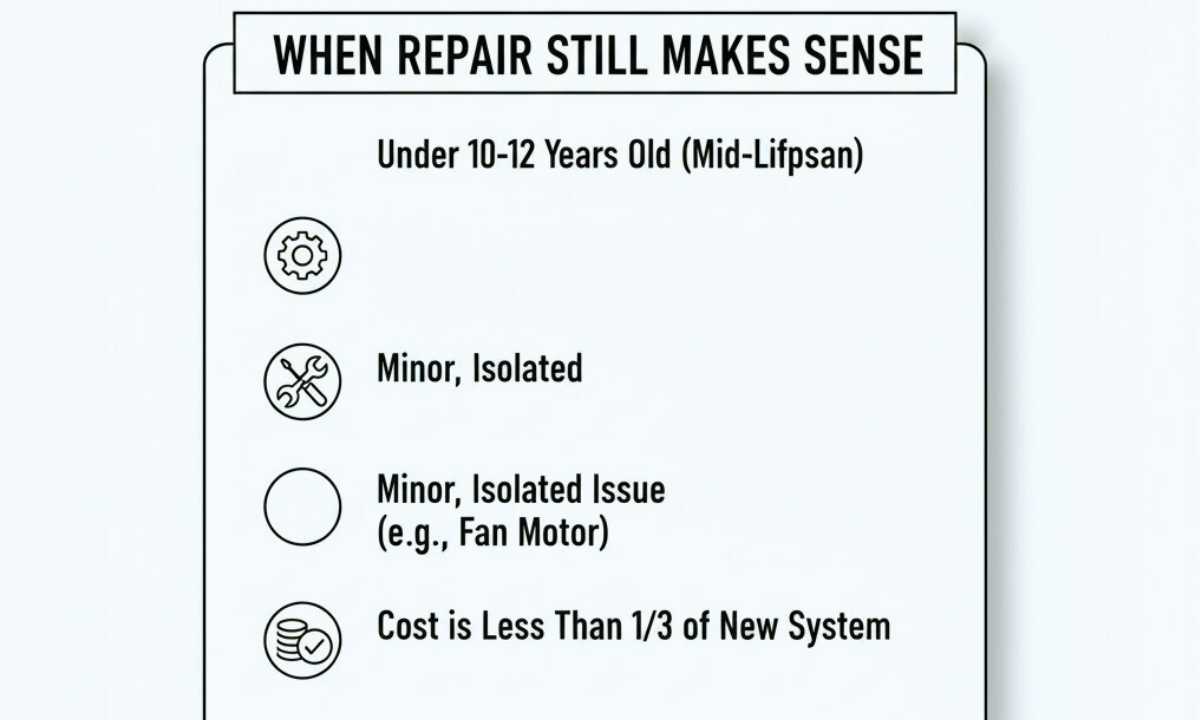
Not every aging furnace needs to be replaced, and pushing homeowners toward replacement too early is one of the fastest ways to lose trust. In Sussex County, repair can still be the smarter move when costs, safety, and performance stay within clear boundaries. This section exists to ground the decision before emotions or escalation take over.
Repair Cost Thresholds That Favor Repair
Yes, repair still makes sense when costs stay below clear financial thresholds. The mistake is not repairing a furnace. The mistake is repairing without limits.
-
Sub-threshold repairs
If a single repair stays well below the cost of a new system and does not repeat year after year, repair is often rational. One isolated fix does not automatically signal decline, especially if the furnace has otherwise been stable. -
Non-safety components
Repairs involving items like sensors, thermostats, or minor electrical parts usually restore function without increasing long-term risk. These fixes do not change how hard the furnace works or how safely it operates, which matters when judging future reliability. In situations where issues are isolated and infrequent, understanding what qualifies as typical local furnace repair work can help homeowners decide whether extending the system’s life is still a low-risk option.
Situations Where Repair Is Rational
Yes, repair is reasonable when performance and risk remain predictable. This is less about age and more about behavior.
-
Low annual repair frequency
A furnace that needs attention once every few years is not signaling failure. Sporadic maintenance is normal, especially in Sussex County where variable winters create uneven seasonal wear. -
Stable winter performance
If the furnace holds temperature during cold snaps without short cycling, unusual noise, or airflow problems, replacement urgency is usually low. Consistent output matters more than how long the unit has existed. -
No efficiency collapse
Gradual efficiency loss is expected over time. What matters is whether heating costs or run times have jumped noticeably without explanation. If fuel use remains steady relative to weather, the system is likely still operating within a healthy range.
Repairs That Do Not Improve Long-Term Outlook
No, some repairs do not meaningfully extend the furnace’s useful life. These fixes often restore operation without reducing future risk.
-
Control boards
Replacing a control board can get heat back on, but it does not reduce wear on the heat exchanger or mechanical components. In older furnaces, this often marks the start of more frequent electrical failures. -
Blowers
A new blower motor improves airflow, but it does not correct underlying age-related stress on the system. When blowers fail late in a furnace’s life, they often signal broader fatigue. -
Ignition systems in aging units
Ignition repairs become less valuable as furnaces age because they tend to repeat. Fixing ignition issues may buy time, but it rarely stabilizes long-term reliability in older systems.
This is the line most homeowners miss. Repair can absolutely be the right move, but only when it preserves predictability. Once repairs stop improving reliability and only keep the system alive month to month, the financial logic quietly flips.
Clear Signs Replacement Is the Smarter Move
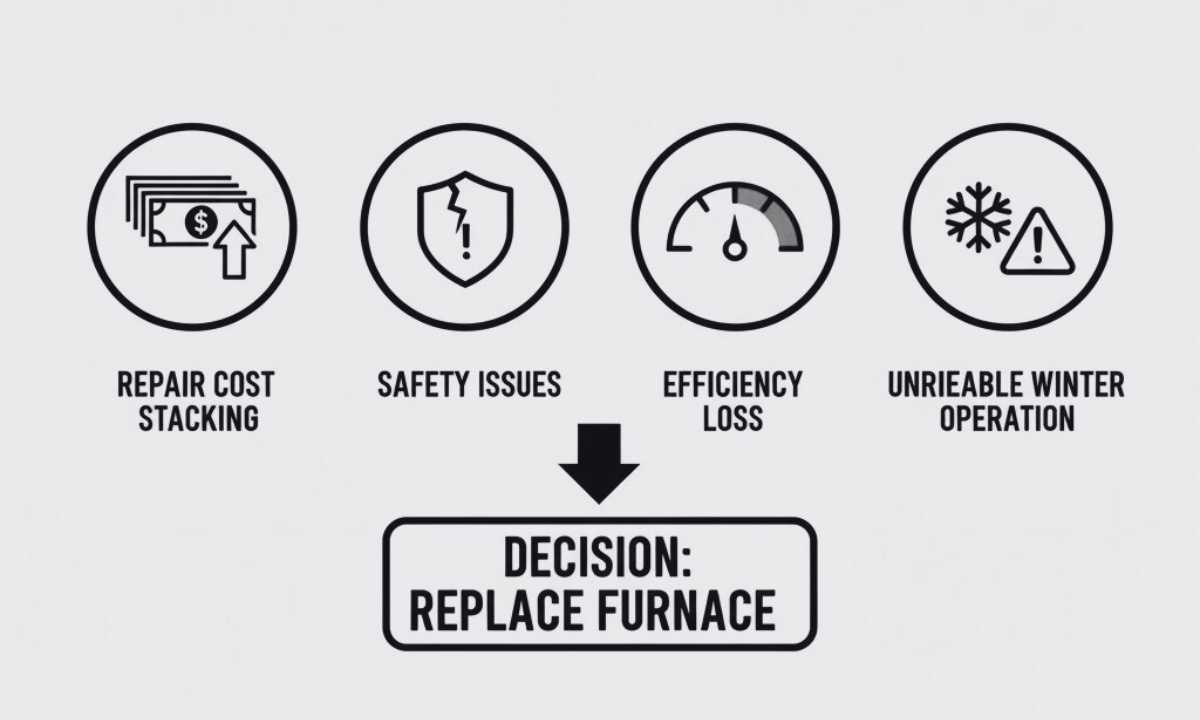
At a certain point, the question stops being “Can this furnace be repaired?” and becomes “Does repairing it still make sense?” This section is meant to remove hesitation by showing the patterns that usually signal a replacement decision, not because a system is old, but because risk, cost, and reliability are no longer working in your favor.
Repair Costs Exceed a Practical Percentage of Replacement
Yes, replacement becomes the smarter move when repair costs start stacking up to a meaningful share of the system’s replacement value.
A single repair rarely triggers this on its own. The problem shows up when multiple repairs land within the same heating season or across two winters. In practical terms, when total repair spending starts approaching roughly one third of the cost of a new furnace, the financial logic shifts. At that point, you are no longer buying stability. You are buying time.
Percentages matter more than raw dollar amounts because replacement costs vary by home, fuel type, and venting requirements. A $1,200 repair might feel manageable until it is followed by another $800 repair the same winter. That cumulative spend often equals a down payment on a system that would reset reliability for the next decade.
Once repair costs begin stacking toward a significant share of replacement value, comparing them against the scope of a full heating system installation often clarifies which path truly lowers long-term risk.
Safety or Structural Components Are Involved
Yes, replacement is usually the responsible choice when safety or structural components are compromised.
Heat exchanger issues fall into this category. Cracks or failures in the heat exchanger create a real risk of carbon monoxide mixing with indoor air. Repairs here are rarely simple, and even when technically possible, they often approach the cost of replacement without restoring long-term confidence.
Venting failures also change the equation. Improper exhaust, corrosion, or back drafting issues affect combustion safety and system efficiency at the same time. These are not comfort problems. They are health and liability problems. Once safety margins narrow, replacement stops being optional and starts being preventative.
Efficiency Loss Is Driving Ongoing Cost Increases
Yes, replacement makes sense when efficiency loss becomes visible in day-to-day operation, not just on paper.
AFUE ratings describe efficiency when a furnace is new. Over time, wear on burners, heat exchangers, and airflow components reduces how much usable heat you actually get from the fuel you pay for. In Sussex County homes, this often shows up as longer run times, slower warm ups, or heating bills climbing even when weather patterns stay similar year to year.
At that stage, fuel is being burned but not effectively delivered as heat. You are paying for waste, not comfort. Repairs may restore partial function, but they rarely reverse systemic efficiency decline in older equipment.
Winter Reliability Is No Longer Predictable
Yes, replacement is the smarter move when winter reliability becomes inconsistent.
January cold snaps are the stress test in Sussex County. Furnaces that fail repeatedly during these periods are signaling that their margin for error is gone. Emergency shutdowns, lockouts, or intermittent ignition failures often cluster during the coldest weeks because components are operating at their limits.
Unpredictable behavior is the key signal here. When you can no longer trust the system to run through a cold stretch without intervention, you are no longer managing maintenance. You are managing risk. At that point, replacement is not about upgrading. It is about restoring predictability before the next winter forces the decision for you.
How Sussex County Winters Change the Repair vs Replace Math
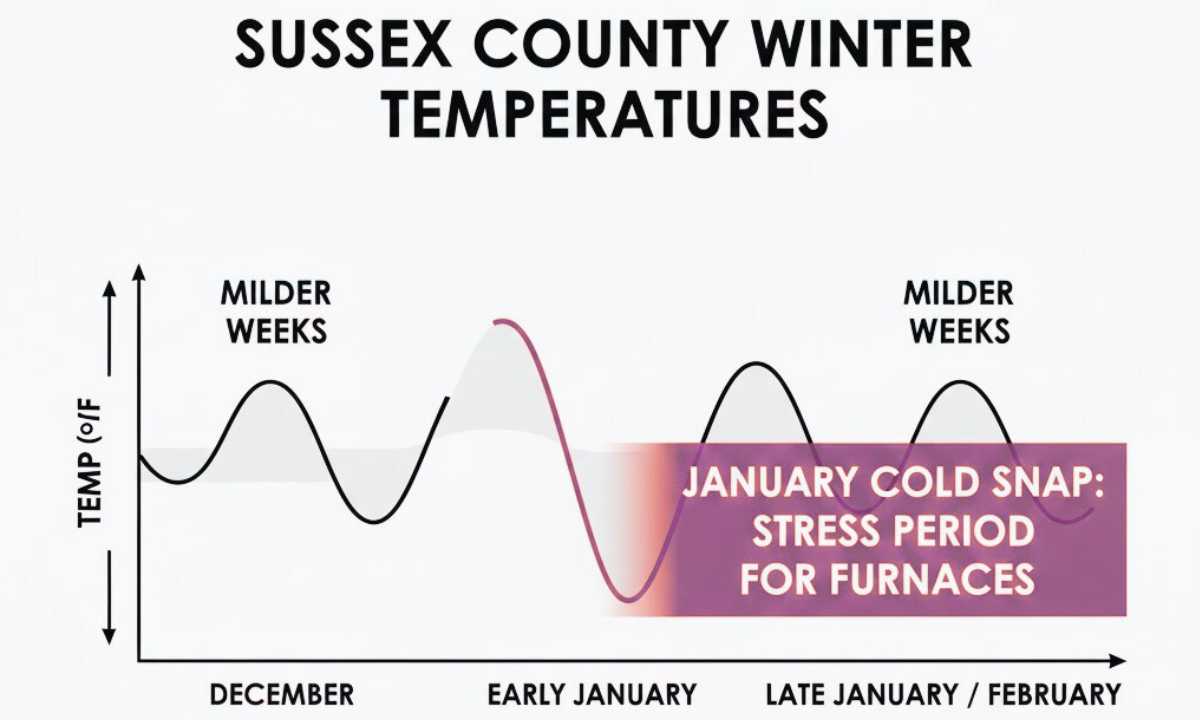
On paper, furnace decisions often look straightforward. In reality, Sussex County winters introduce variables that quietly change the risk profile. Mild stretches hide stress, cold snaps expose it, and fuel pricing volatility alters cost assumptions mid-season. Understanding how these factors interact is what separates a controlled decision from a forced one.
Mild Weeks vs January Cold Snaps
Sussex County winters rarely stay cold for long, and that inconsistency can be misleading. Furnaces often perform acceptably during mild weeks, giving the impression that another season is safe.
The problem shows up during January cold snaps. When temperatures drop and stay low, heat load increases sharply. Older or stressed systems experience longer run times, higher internal temperatures, and greater mechanical strain. Components that seem stable in December can fail under sustained demand in January, not because they suddenly broke, but because they finally reached their stress limit.
This stop-start winter pattern is why systems here often fail during the coldest stretch, not gradually over the season.
Fuel Cost Volatility in Sussex County
Fuel pricing adds another layer of uncertainty to the repair versus replace decision.
Natural gas tends to be more stable year to year, which makes operating costs easier to predict. That stability can justify short-term repairs when the system is otherwise reliable.
Propane and oil behave differently. Pricing fluctuates with delivery schedules, supply constraints, and regional demand spikes. A furnace that appears affordable to keep running in early winter can become significantly more expensive to operate after a single price swing. That volatility magnifies inefficiency and makes aging systems harder to justify, even when repair costs seem manageable.
Why “One More Winter” Is Often the Riskiest Choice
Waiting often feels conservative, but in Sussex County it carries hidden risk.
Timing matters. Delaying replacement until failure limits equipment availability, compresses installation timelines, and increases the chance of accepting a less-than-ideal solution under pressure. Winter breakdowns also reduce installer flexibility, which can affect sizing accuracy and system selection.
Availability risk compounds this problem. During peak winter demand, replacement options narrow and scheduling delays grow. What could have been a controlled decision in the fall becomes a reactive one in January.
In Sussex County, the riskiest choice is often not replacing too early, but waiting until the decision is no longer yours to control.
Repair vs Replacement Cost Comparison (Realistic Scenarios)

Cost is usually where this decision stalls. Not because homeowners cannot do the math, but because the math is often framed in a way that hides long-term risk. In Sussex County, repair versus replacement is less about a single invoice and more about how costs stack across multiple winters under variable conditions.
Typical Repair Cost Patterns Over 3–5 Years
Repair costs rarely stay flat once a furnace enters its late life stage. What starts as an occasional fix often becomes a repeating pattern.
Frequency escalation becomes the first warning sign. A furnace that needs one repair every few years may suddenly need attention every season. Each repair feels manageable on its own, but the intervals shorten as internal components age together rather than independently.
Diminishing returns follow quickly. Money spent keeping an aging furnace operational does not improve efficiency, reliability, or comfort. After two or three winters, many homeowners realize they have paid a meaningful percentage of replacement cost without reducing the likelihood of another failure.
By year three to five, the total repair spend often surprises homeowners more than a replacement quote ever would have, especially when emergency calls and winter labor rates are factored in.
Replacement Cost Components Homeowners Overlook
Replacement costs feel high when they are viewed as a single number instead of a scope of work. In Sussex County homes, that scope is often broader than expected.
Duct compatibility is a common blind spot. Older duct systems may not match the airflow requirements of newer furnaces, leading to additional adjustments or corrections that were never part of the original expectation.
Venting updates are another frequent surprise. Changes in efficiency standards often require new venting configurations to meet current safety codes, particularly in older homes where venting was sized for outdated equipment.
Permits and code compliance are not optional. These costs do not add comfort, but they protect safety and legality. When they are ignored in mental budgeting, replacement feels more expensive than it actually is in context.
Why Online Cost Calculators Fail Delaware Homes
Online calculators promise clarity, but they rely on assumptions that rarely match Sussex County housing stock.
They ignore real heat loss. Most calculators assume average insulation and air sealing, which does not reflect older coastal homes with higher leakage, aging envelopes, and inconsistent thermal performance.
They ignore winter variability. Sussex County winters shift between mild weeks and sharp cold snaps. Calculators smooth this volatility into a single seasonal average, masking the periods when aging furnaces are under the most stress and operating costs spike.
They ignore infrastructure limits. Electrical capacity, venting constraints, and duct condition are never part of calculator logic, yet they heavily influence both repair viability and replacement cost. Many calculators overlook how much performance is lost through duct condition and airflow issues, even though these problems often drive higher bills and uneven heating more than the furnace itself.
This is why calculator outputs often feel comforting but misleading. Real cost clarity comes from understanding how your home behaves over multiple winters, not from a generic estimate built on averages that do not apply locally.
| Scenario Pattern | Repair Trajectory Over Time | Replacement Risk Profile |
|---|---|---|
| Occasional minor repairs | Costs stay low and predictable | Replacement can wait |
| Annual winter repairs | Costs stack quickly | Replacement becomes safer |
| Multiple component failures | Diminishing returns | Replacement favored |
| Emergency cold-snap failures | High stress and premium labor | Replacement reduces risk |
How to Tell If Replacement Is Being Pushed Too Early
Not every replacement recommendation is wrong, but many Sussex County homeowners worry about being rushed into a decision before it is truly necessary. That concern is reasonable, especially when heat is on the line during winter. This section helps you distinguish between a replacement recommendation based on real evaluation and one driven by pressure rather than evidence.
Red Flags in Replacement Recommendations
Yes, there are clear warning signs when replacement is being pushed without proper evaluation. These issues usually appear before anyone explains how your home performs, how your system is failing, or why repair is no longer viable.
-
No load calculation.
If no one measures or discusses how much heat your home actually needs, the recommendation lacks foundation. Furnace replacement decisions should be based on measured heat loss, insulation, and layout, not age alone or rough square footage. -
No inspection evidence.
A legitimate replacement call should reference what was physically inspected. If there are no specifics about the heat exchanger, venting condition, combustion readings, or visible deterioration, the recommendation is not evidence based. -
One size fits all pricing.
Flat replacement pitches that look identical for every home often ignore duct condition, venting requirements, or fuel differences. Sussex County homes vary widely, and pricing should reflect those differences.
What a Legitimate Replacement Recommendation Includes
Yes, when replacement truly makes sense, the reasoning is usually clear and verifiable. Credible recommendations are specific to your home and explain why repair no longer protects comfort, safety, or cost stability.
-
Measured heat loss.
A proper recommendation explains how your home loses heat and why a specific furnace size fits those conditions. This prevents oversizing or undersizing that creates comfort and efficiency problems later. -
Documented safety findings.
When safety drives replacement, the evidence should be explicit. This may include confirmed heat exchanger damage, venting failures, or carbon monoxide risk supported by inspection or testing, not vague warnings. -
Clear repair vs replacement comparison.
A trustworthy recommendation compares realistic repair paths with replacement outcomes. That includes expected remaining lifespan, likely future repair frequency, and how winter reliability changes over time.
This distinction matters because good advice reduces regret. The next section explains how Sussex County winter patterns affect timing and why climate often matters more than urgency when deciding whether to repair or replace.
Installation Timing and Planning Risks in Sussex County
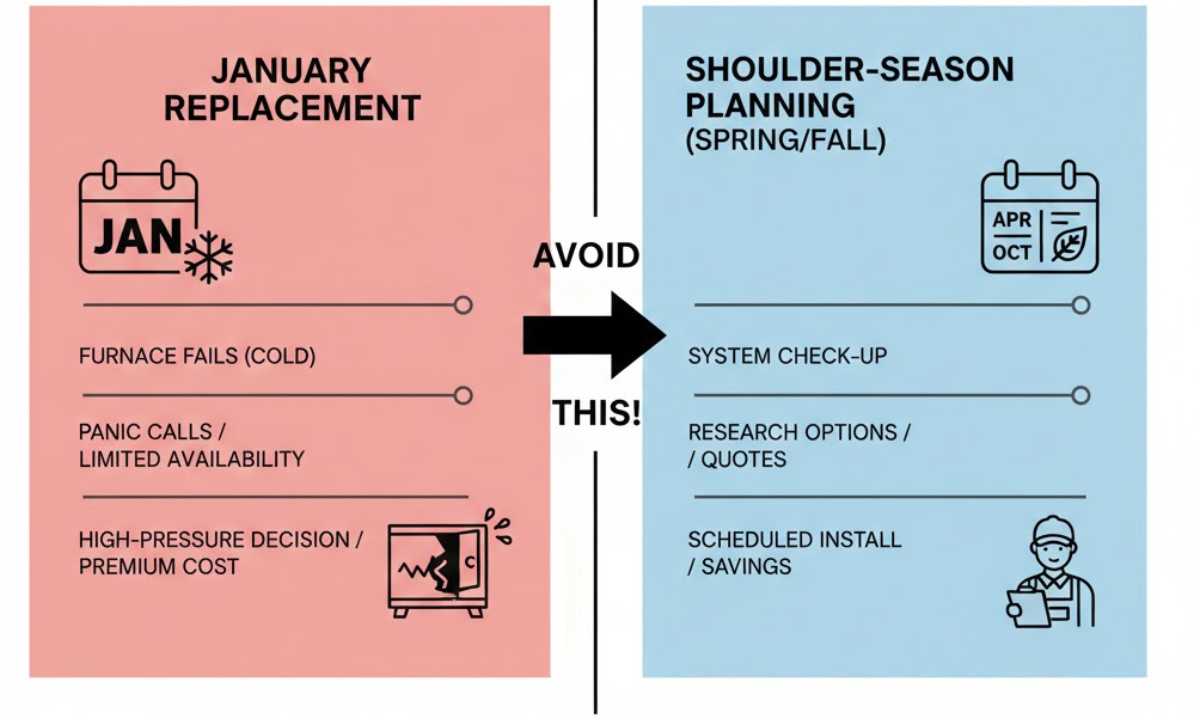
Most furnace replacement regret in Sussex County has less to do with the system chosen and more to do with when the decision was forced. Timing affects cost, options, and installation quality in ways homeowners rarely see until it is too late. This section explains why planning matters and how timing alone can quietly add risk or unnecessary expense.
Why Emergency Winter Replacements Cost More
Yes, emergency winter replacements almost always cost more and offer fewer good options. When a furnace fails during a January cold snap, the conditions are stacked against the homeowner from the start.
Scheduling constraints tighten immediately. During peak winter demand, contractors prioritize restoring heat as fast as possible. That urgency limits flexibility in system selection, duct modifications, or efficiency upgrades because the primary goal becomes getting heat back on quickly.
Equipment availability is also restricted. Manufacturers and distributors carry fewer models in peak season, especially higher efficiency or less common sizes. Homeowners often end up choosing from what is available rather than what is ideal for their home, which can affect comfort and long term operating cost.
Best Time to Plan Replacement Proactively
Yes, planning replacement before failure creates leverage and reduces risk. In Sussex County, timing replacement outside peak winter demand changes the entire decision dynamic.
Shoulder season logic matters. Late spring and early fall offer milder temperatures that allow thoughtful evaluation without the pressure of freezing nights. This is when load calculations, duct assessments, and efficiency comparisons can be done properly instead of rushed.
Scheduling leverage improves outcomes. Proactive planning gives homeowners more control over installation timing, equipment selection, and scope of work. Contractors have more flexibility, pricing is often steadier, and necessary upgrades can be addressed without emergency compromises.
Understanding timing risk helps explain why “one more winter” decisions so often backfire. The next section breaks down how Sussex County winter patterns specifically change the repair versus replacement math and why waiting can increase both cost and uncertainty.
Key Decision Takeaways for Sussex County Homeowners
Here’s how Sussex County homeowners can frame the decision realistically.
-
When furnace repair is still financially justified
Repair usually makes sense when the cost is contained, the issue is isolated, and the system has been stable through recent winters. If repairs are infrequent, involve non-safety components, and your furnace is still heating consistently during January cold snaps, extending its life can be a rational, low-risk choice. -
When replacement becomes the lower-risk option
Replacement tends to make more sense once repair costs start stacking or when failures become unpredictable. If you are budgeting for fixes every winter or worrying about breakdowns during cold weather, the risk profile has already shifted, even if the furnace technically still runs. -
Why climate and fuel type matter more than furnace age alone
Furnace age is an incomplete metric in Sussex County. Variable winters, coastal humidity, and fuel cost volatility mean two furnaces of the same age can have very different outlooks. How the system performs during cold snaps and how expensive it is to operate matter more than the number on the nameplate. -
How to avoid emergency installs and upsell pressure
The most expensive and stressful replacements happen when systems fail unexpectedly in winter. Planning before that point gives you control over timing, equipment options, and pricing, and reduces the chance of being pushed into decisions based on urgency rather than fit. -
Why proper evaluation matters more than rebates or brand
Incentives and brand reputation can influence cost, but they do not fix sizing issues, duct problems, or heat loss. A clear evaluation of your home’s condition, fuel availability, and winter performance will always have a bigger impact on comfort and long-term cost than choosing a popular model or chasing a rebate.
Taken together, these points form a simple framework. The right decision is the one that reduces winter risk, aligns with how your home actually performs in Sussex County conditions, and keeps you in control of timing instead of reacting under pressure.
Common Furnace Repair and Replacement Questions Sussex County Homeowners Ask
These are the questions that come up most often once homeowners start weighing repair costs against replacement risk. They reflect real search behavior and real hesitation, especially heading into winter.
Is it worth repairing a furnace over 15 years old?
Yes, sometimes, but only under specific conditions.
Age alone does not automatically trigger replacement in Sussex County. A furnace over 15 years old can still be worth repairing if the issue is minor, repairs have been infrequent, and the system has been heating reliably during recent winters. The risk rises when age combines with repeated repairs, declining efficiency, or inconsistent performance during cold snaps.
How much should furnace repairs cost before replacement makes sense?
There is no single dollar amount, but percentage matters more than price.
When repair costs approach a meaningful portion of replacement cost, the math shifts quickly. This is especially true if those repairs are recurring or do not improve reliability. In Sussex County, where winter failures carry higher disruption risk, stacked repair costs often signal that replacement is the safer long-term move.
Can a cracked heat exchanger be repaired?
No, a cracked heat exchanger cannot be safely repaired.
A cracked heat exchanger is a structural failure that affects combustion safety and carbon monoxide containment. Temporary fixes are not considered safe or compliant. Once this issue is confirmed, replacement is the only responsible option, regardless of furnace age.
Does replacing a furnace lower heating bills in Delaware?
Yes, but only when inefficiency is the real problem.
Replacing an older furnace can reduce heating bills if efficiency loss, fuel waste, or short cycling is driving higher costs. However, if high bills are caused by duct leakage, poor insulation, or heat loss, a new furnace alone may not deliver meaningful savings. In Delaware homes, system performance and building condition must be evaluated together.
Should I replace my furnace before winter?
Yes, planning ahead usually reduces cost and risk.
Replacing a furnace before winter allows for better scheduling, more equipment options, and fewer emergency decisions. Sussex County homeowners who plan replacements during shoulder seasons avoid premium pricing and reduce the chance of being forced into a rushed install during a January cold snap.
What to Do Next If You’re On the Fence
If you’re still weighing repair versus replacement, that hesitation is usually a sign that the decision needs clearer information, not more pressure. Most homeowners in Sussex County feel stuck because they are trying to predict risk without seeing the full picture of how their furnace is actually performing.
The next step is to request a professional evaluation before another breakdown forces the issue. A proper assessment looks at recent repair history, winter performance, safety components, and how much useful life realistically remains. This kind of evaluation helps separate a furnace that can be safely extended from one that is becoming a liability.
Load calculations matter here more than many homeowners expect. They measure how much heat your home actually needs during Sussex County winters, not just how large the existing furnace is. Without that data, it is easy to replace a struggling system with one that is oversized, undersized, or mismatched to the home’s heat loss, which can create new comfort or cost problems.
If replacement is likely in the next few years, planning before failure gives you control. Scheduling ahead avoids winter emergency pricing, expands equipment options, and allows time to address duct, venting, or electrical issues without rushing decisions. That planning window is often the difference between a confident upgrade and a stressful install.
For homeowners who want broader context before deciding, reviewing the heating system options available locally can help clarify how repair, replacement, and long-term planning fit together without forcing a specific path.
If you want to go deeper, reading about how winter heating systems behave in coastal Delaware or how heat loss affects furnace performance can help refine your decision. The more you understand before winter pressure sets in, the easier it is to choose a path that reduces risk and avoids regret.