
An HVAC tune-up is a scheduled preventive maintenance service in which a licensed technician inspects, cleans, tests, and adjusts the mechanical, electrical, and safety components of a residential heating and cooling system. The service runs on a two-season cycle. A spring visit addresses the cooling system before summer load, and a fall visit addresses the heating system before winter demand, because each side of the equipment carries components the other does not.
That seasonal split matters more on the Delmarva Peninsula, where coastal humidity, salt air exposure, and wide temperature swings put additional stress on outdoor condensing units and electrical connections year round.
A standard tune-up runs $75 to $200 per visit. Maryland Delmarva Power customers may qualify for a no-cost tune-up through the EmPOWER Maryland program.
What Does an HVAC Tune-Up Include?
An HVAC tune-up includes a full inspection of electrical connections, thermostat calibration, coil cleaning, condensate drain clearing, refrigerant charge measurement, lubrication of moving parts, filter replacement, and a system safety test. The service breaks into three phases, each targeting a different failure category.
The electrical and mechanical inspection catches the components most likely to fail without warning during peak demand. A technician tests each one against manufacturer baselines.
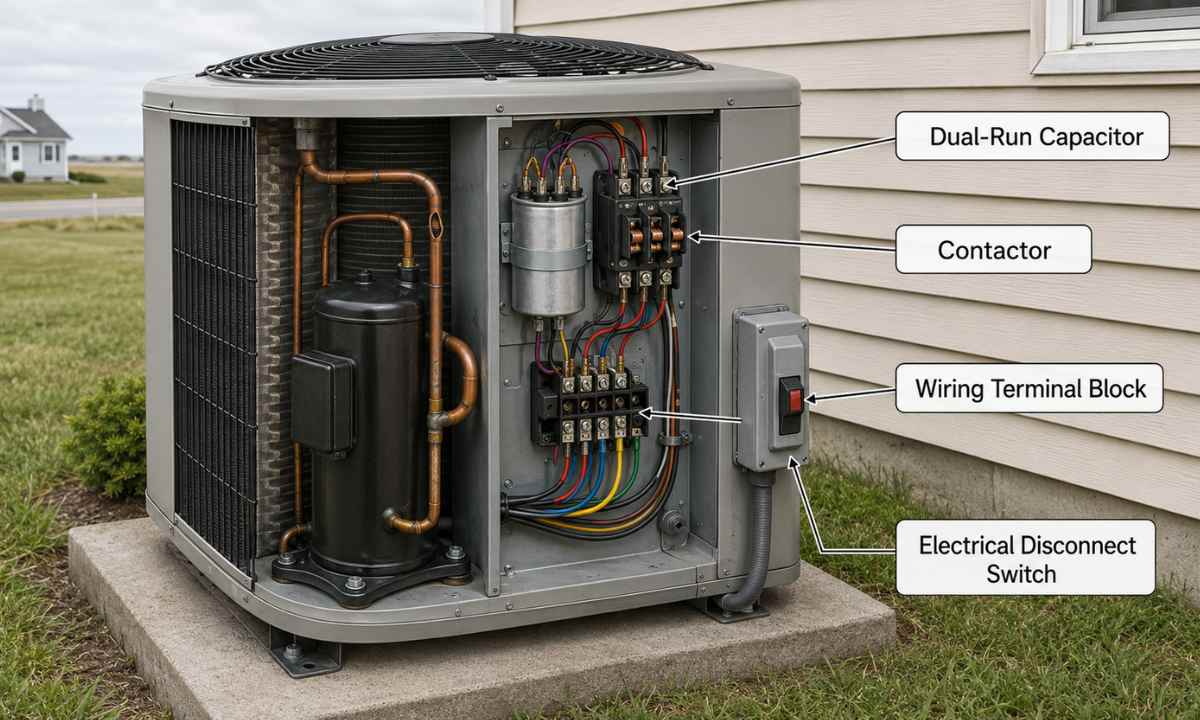
- Voltage and amperage draw at the compressor and blower motor, compared against the unit’s rated specifications on the data plate
- Capacitor function tested with a multimeter to confirm microfarad output is within 5% of the rated value
- Contactor condition checked for pitting, arcing, or sticking that would prevent the compressor from engaging reliably
- Wiring connections inspected for heat discoloration, corrosion, or looseness at terminal blocks and the disconnect switch
A capacitor losing output gradually does not trip a breaker or trigger an error code. It shows up as a compressor that struggles to start on the hottest afternoon of the year, when the electrical load peaks and the component cannot deliver enough charge to turn the motor over.
That pattern is why the multimeter reading during a tune-up matters.
Dirty coils and clogged drain lines are the two most common reasons a system loses cooling capacity between tune-ups.
- Evaporator coil cleaned to remove dust and biological buildup that insulates the surface and reduces heat transfer
- Condenser coil washed to clear dirt, grass clippings, and salt residue that blocks airflow through the outdoor unit’s fin structure
- Condensate drain line flushed to prevent standing water in the drain pan, which can trigger a float switch shutdown or cause water damage
- Thermostat accuracy verified against an independent temperature reading to confirm the system cycles at the correct setpoint
- Blower motor bearings lubricated where the motor design allows it, reducing friction and noise
The technician measures temperature differential across the evaporator coil, which should read between 15°F and 22°F at the supply and return registers. A split below 15°F suggests low refrigerant or restricted airflow. A split above 22°F points to a blower speed problem or an undersized return duct. Static pressure, measured in inches of water column, confirms whether the duct system moves enough air volume for the equipment to operate within its rated capacity.
The refrigerant and airflow verification phase determines whether the system holds the correct charge and whether that charge reaches the evaporator at the right pressure. Pressure readings alone do not confirm correct charge, because a system can show normal pressures while restricted airflow masks a low charge condition.
The technician measures refrigerant charge through superheat and subcooling readings at the service valves. Superheat confirms the refrigerant is fully evaporating inside the evaporator coil before returning to the compressor as vapor. Subcooling confirms full condensation in the condenser coil before the refrigerant cycles back to the expansion valve as liquid. These two measurements isolate refrigerant behavior from airflow variables, which is why they replaced pressure-only checks as the industry standard.
That certification is not optional. Any technician who purchases, handles, or recovers refrigerant must hold EPA Section 608 certification under 40 CFR Part 82, Subpart F of the Clean Air Act.
How Is a Cooling Tune-Up Different from a Heating Tune-Up?
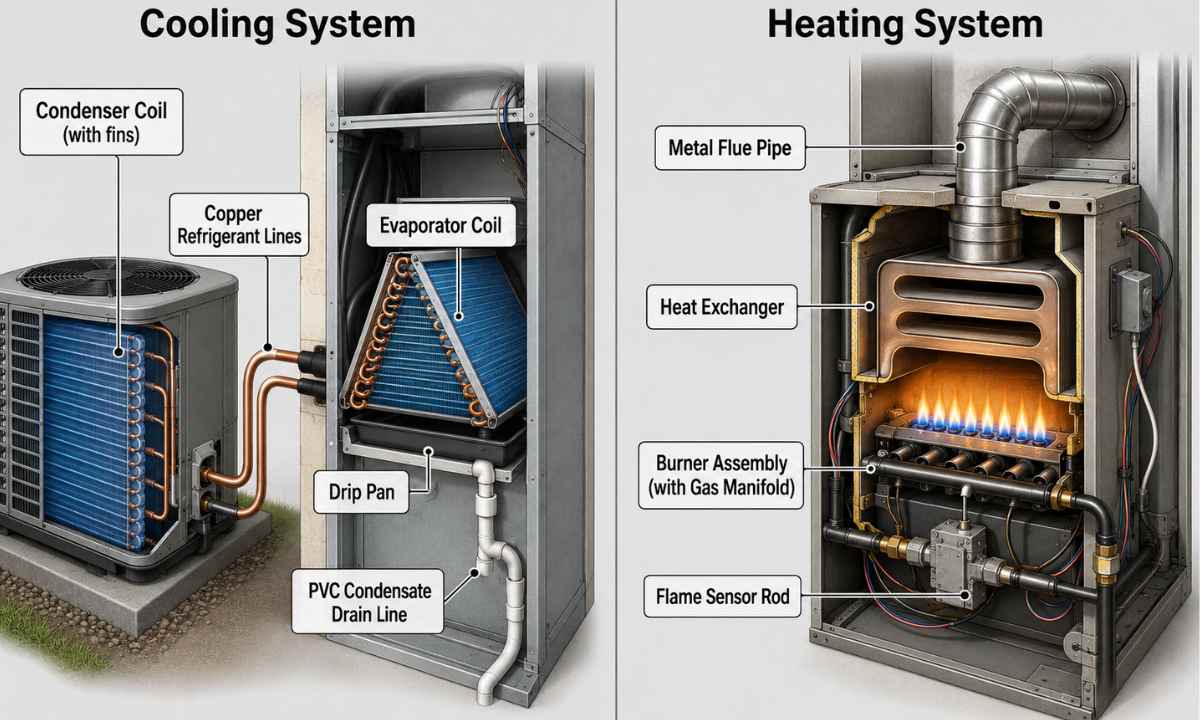
A spring cooling tune-up focuses on refrigerant charge, condenser and evaporator coils, and condensate drainage, while a fall heating tune-up focuses on the heat exchanger, burner assembly, ignition system, and carbon monoxide safety testing. The two visits are not interchangeable because each targets components the other does not touch.
| Spring Cooling Tune-Up | Fall Heating Tune-Up | |
|---|---|---|
| Primary Components | Condenser coil, evaporator coil, refrigerant charge (superheat and subcooling), condensate drain line | Heat exchanger, burner assembly, flame sensor, hot surface igniter, gas valve |
| Electrical Checks | Capacitor, contactor, blower motor, wiring connections | Limit switch, inducer motor, gas valve voltage, thermocouple or flame sensor microamp reading |
| Airflow and Combustion | Static pressure, temperature differential (15°F–22°F), blower speed | Flue draft, combustion analysis, carbon monoxide levels at supply registers |
| Safety Testing | Refrigerant leak detection, electrical disconnect function | Carbon monoxide testing, gas pressure verification, heat exchanger integrity |
| Seasonal Timing | March through May, before summer cooling load | September through November, before winter heating demand |
| Minimum Outdoor Temp | 60°F for central AC; 35°F for air source heat pumps | No minimum required |
The cooling tune-up requires a minimum outdoor temperature because the system must run under load for the technician to take accurate refrigerant readings. Central AC units need at least 60°F; air source heat pumps need at least 35°F. Those thresholds come from the Delmarva Power HVAC Tune-Up Program guidelines and reflect the temperatures at which superheat and subcooling measurements become reliable. Scheduling a cooling tune-up in February, when outdoor temperatures sit well below those thresholds, produces readings that do not reflect how the system will perform in July. Spring is the correct window.
The fall heating tune-up carries a different priority. The heat exchanger is a sealed metal chamber where combustion gases transfer heat to the air circulating through the home, and a crack in that chamber allows combustion byproducts, including carbon monoxide, to enter the airstream. That crack is not visible to the homeowner. The technician runs a combustion analysis to measure carbon monoxide levels at the supply registers and inspects the heat exchanger surface for stress cracks, corrosion, or separation at the seams. A failing hot surface igniter prevents the furnace from starting, and a dirty flame sensor causes the system to shut down within seconds of ignition as a safety precaution.
Heat pump systems are different. The same equipment handles both cooling and heating by reversing refrigerant flow through a reversing valve, so a heat pump receives both seasonal tune-ups. A dual fuel system, which pairs a heat pump with a gas furnace for backup heating below a set temperature threshold, requires all three inspection scopes: cooling components, heat pump refrigerant cycle, and gas furnace combustion safety. Expect a longer visit.
What Is the Difference Between an HVAC Tune-Up and a Maintenance Plan?
A tune-up is a single scheduled service visit where a technician inspects, cleans, and adjusts the system. A maintenance plan is an ongoing agreement that bundles two seasonal tune-ups per year with additional benefits such as priority scheduling, repair discounts, and parts coverage. The comparison below shows which option fits based on how many systems the home has, how old they are, and how much the homeowner wants to spend per year.
| Single Tune-Up | Maintenance Plan | |
|---|---|---|
| What It Is | One service visit covering one system side (cooling or heating) | Annual or semi-annual contract covering both seasonal visits |
| Visit Duration | 45 to 90 minutes per visit | Same per-visit duration |
| Frequency | Booked individually, typically once or twice per year | Two visits per year included in the agreement |
| Cost | $75 to $200 per visit | $150 to $500 per year covering both visits |
| Included Benefits | The service itself: inspection, cleaning, testing, adjustment | Priority emergency scheduling, discounted labor rates on repairs, automatic seasonal scheduling, filter delivery (some plans), extended parts coverage |
| Documentation | Service receipt for warranty records | Ongoing service history maintained by the contractor |
The decision between a single tune-up and a plan depends on three factors. Newer systems still under manufacturer warranty benefit most from a plan because the contractor maintains the documented service history that warranty claims require. That documentation matters. Homes with multiple HVAC components, a furnace and an AC unit or a heat pump with an air handler, pay for more visits per year, and a plan bundles those visits at a lower combined rate. The third factor is repair history. A single avoided emergency repair at $200 to $1,500 or more can exceed the entire annual plan cost, which means the plan pays for itself the first time a covered repair surfaces during a scheduled visit instead of as a weekend emergency call.
On the Delmarva Peninsula, coastal salt air corrodes condenser coil fins and electrical contacts faster than manufacturer maintenance schedules assume. A homeowner running a single system under five years old with no missed tune-ups is the one case where a plan does not change the math.
Does Skipping a Tune-Up Void Your HVAC Warranty?
Most major HVAC manufacturers, including Carrier, Trane, Lennox, and American Standard, require documented annual professional maintenance as a condition of warranty coverage. Skipping tune-ups can result in denied warranty claims for compressor, heat exchanger, or other major component failures. The language varies by manufacturer, but the core requirement is consistent: a licensed contractor must perform and document preventive maintenance at least once per year, and the homeowner must retain that documentation for the life of the coverage period.
A compressor warranty typically runs 5 to 10 years under the registered warranty. A heat exchanger warranty can extend to 20 years or the life of the unit on some models. Losing coverage on either component because of missing maintenance records turns a warranty-covered replacement into an out-of-pocket expense that can run $2,000 to $4,000 for a compressor or $1,500 to $3,500 for a heat exchanger. The records prevent that.
Warranty registration is a separate requirement that homeowners frequently miss. Most manufacturers require the owner or installing contractor to register the equipment within 60 to 90 days of installation, and failing to register reduces the warranty from the full registered period to a shorter limited base warranty.
Every service receipt should include the date of service, the technician’s name, the contractor’s license number, the tasks performed, and any parts replaced. That level of detail satisfies the documentation standard most manufacturers specify in their warranty terms. Vague receipts fail. A receipt that lists only “tune-up performed” with a date does not meet the standard if a warranty claim is disputed. The manufacturer or their claims administrator can request itemized proof that specific maintenance tasks, such as refrigerant charge verification, coil cleaning, and electrical testing, were actually completed during the visit.
For Delmarva Peninsula homeowners, keeping those receipts also provides backup documentation for any participation in the Delmarva Power HVAC Tune-Up Program.
How Much Does an HVAC Tune-Up Cost on the Delmarva Peninsula?
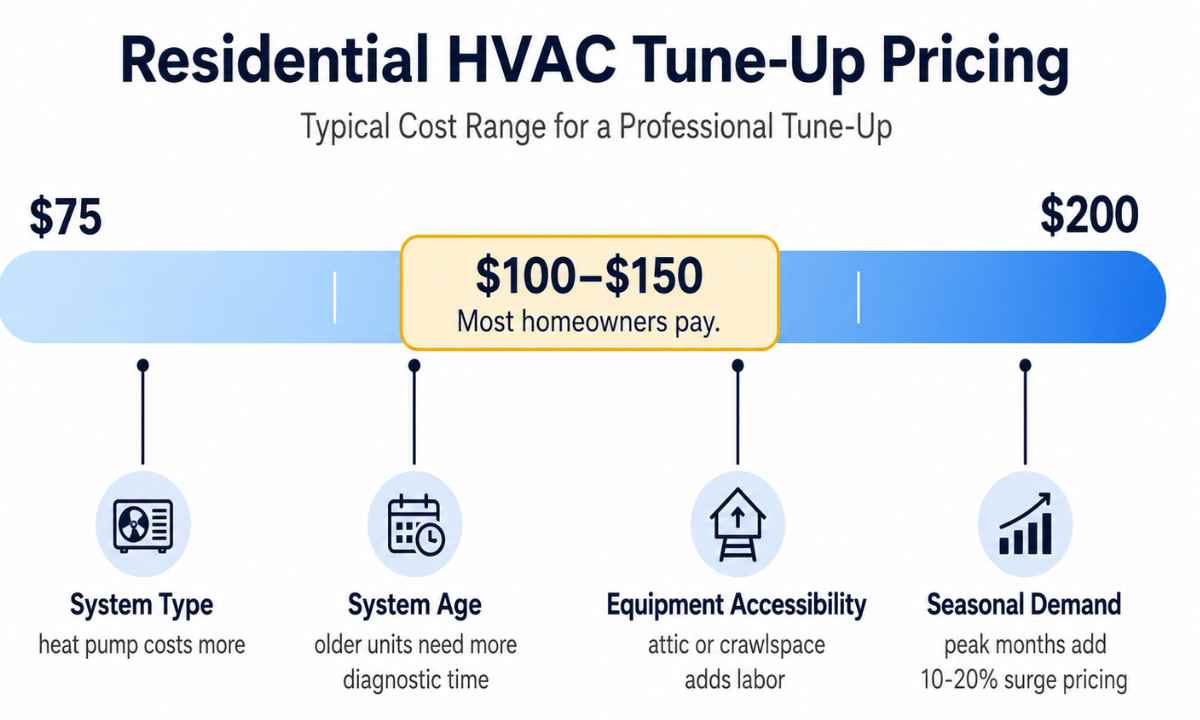
A single HVAC tune-up on the Delmarva Peninsula costs $75 to $200 per visit, consistent with national averages. Delmarva Power customers in Maryland may qualify for a no-cost residential tune-up through the EmPOWER Maryland HVAC Tune-Up Program, which also includes eligibility for a no-cost smart thermostat installation.
Most homeowners pay $100 to $150 for a standard AC or furnace tune-up. Several factors shift that number in either direction.
- System type: heat pump tune-ups typically cost more than single-mode AC or furnace visits because the technician inspects both the cooling and heating cycles in one session
- System age: units older than 10 years often require more diagnostic time and are more likely to surface components that need replacement during the visit
- Equipment accessibility: attic-mounted air handlers, rooftop units, or systems in tight crawlspaces add labor time that some contractors bill separately
- Seasonal demand: scheduling in spring or fall before peak summer or winter demand avoids the 10% to 20% surge pricing that many contractors apply during high-volume months
The $75 end of the range usually reflects a basic inspection without coil cleaning or refrigerant verification. A thorough tune-up covering electrical testing, coil cleaning, and refrigerant verification runs closer to the $150 to $200 range. The difference is scope, not quality of contractor.
That price disappears entirely for qualifying Maryland homeowners.
The EmPOWER Maryland HVAC Tune-Up Program, administered through Delmarva Power, offers a no-cost residential tune-up for Maryland customers with eligible equipment. A smart thermostat may be included at no cost. Eligibility is specific.
- The home must have residential ducted HVAC equipment in working condition
- Central AC systems require a minimum outdoor temperature of 60°F at the time of service
- Air source heat pumps require a minimum outdoor temperature of 35°F
- The tune-up must be scheduled through a Delmarva Power participating contractor
Worcester County and Wicomico County homeowners fall within the Delmarva Power service territory and are eligible to apply. The program covers the tune-up itself. Repairs the technician identifies during the visit are quoted separately at standard rates. Sussex County, Delaware homeowners should check current Delaware utility incentive availability separately, as the EmPOWER Maryland program does not extend across the state line.
How Often Should You Schedule an HVAC Tune-Up?
Schedule an HVAC tune-up twice per year: once in spring for the cooling system and once in fall for the heating system. Heat pump owners should schedule both visits because the same equipment handles heating and cooling cycles. The spring window runs March through May, and the fall window runs September through November, timed so the system is inspected before the season that loads it heaviest.
Two tune-ups per year is not an arbitrary recommendation.
Carrier, Trane, and Lennox all specify annual professional maintenance in their warranty terms, and a system that handles both cooling and heating runs through two full mechanical cycles per year, each stressing different components. Scheduling before June for cooling and before November for heating avoids the extended wait times and 10% to 20% surge pricing that contractors in high-demand markets apply during peak season.
Salt air on the Delmarva Peninsula accelerates corrosion on condenser coil fins and electrical connections faster than inland environments degrade the same components. Outdoor condensing units within a few miles of the coast accumulate salt residue on fin surfaces between tune-ups, restricting airflow and reducing heat transfer efficiency even when the system is otherwise well maintained. Systems with a SEER2 rating near the federal minimum are less tolerant of that efficiency loss than higher-rated units, because they have less margin before the homeowner notices higher energy costs or uneven cooling.
Three conditions on the Delmarva Peninsula warrant a mid-season filter check between full tune-ups. Systems older than 10 years running continuously during Delmarva summer humidity cycle air through the filter at higher volume and for longer stretches. Homes with pets or high-dust environments load the filter faster than the standard 90-day replacement interval assumes.
A clean filter is the one maintenance task the homeowner controls between professional visits.
What Signs Indicate Your HVAC System Needs a Tune-Up Now?
Uneven room temperatures, unusual noises, a sudden spike in energy bills, weak airflow from vents, short cycling, and unusual odors all indicate the system needs professional attention before the next scheduled tune-up. Each symptom maps to a specific component that a tune-up would test, clean, or adjust.
Performance warning signs point to mechanical or airflow problems that degrade output but do not pose an immediate safety risk. The symptom tells the homeowner something is wrong; the component behind it tells the technician where to look.
- Uneven temperatures across rooms: may indicate a failing blower motor that cannot distribute air evenly, leaking or disconnected ductwork, or a zone damper stuck in one position
- Weak airflow from supply vents: most often caused by a dirty evaporator coil restricting heat transfer, a clogged filter reducing air volume, or a blower motor losing speed as its capacitor degrades
- Short cycling, where the system turns on and off within minutes: commonly traced to a failing capacitor, a thermostat reading the wrong temperature, or low refrigerant charge causing the system to hit its low-pressure safety switch
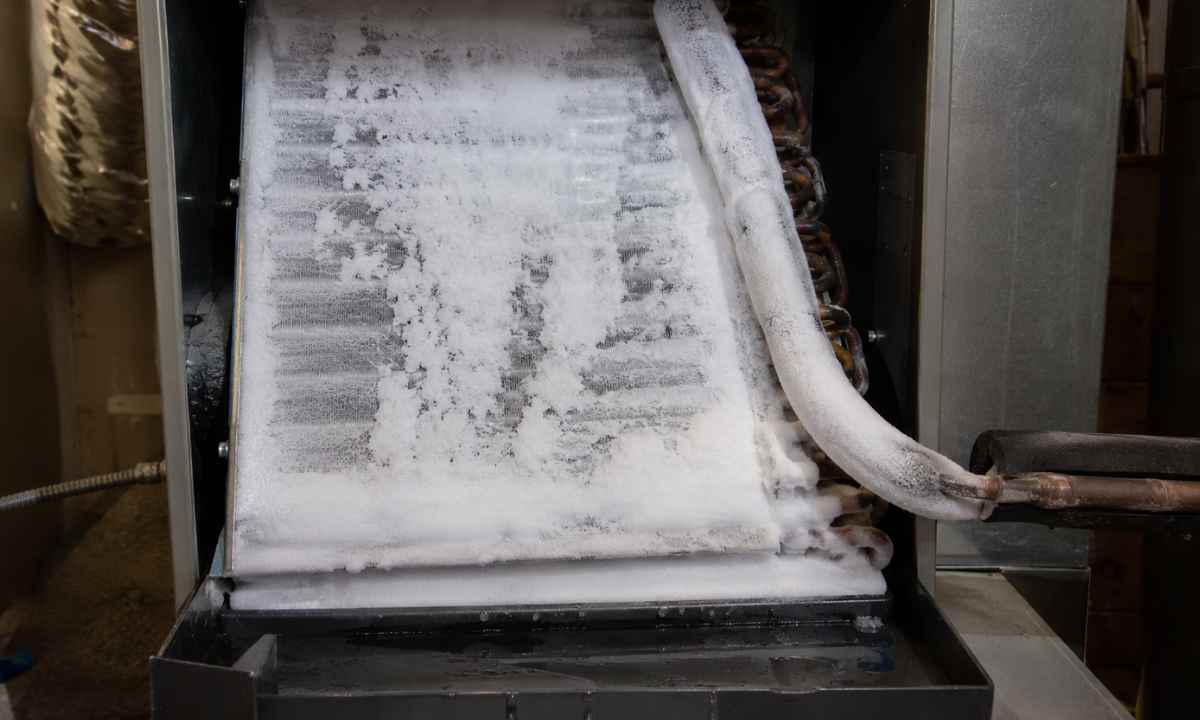
A sudden spike in energy bills without a change in usage patterns often confirms one of these conditions has been developing over several weeks. The system draws more power to compensate for the restriction or failure. Ice forming on the evaporator coil or water pooling near the indoor unit are visual confirmations that the system is not moving enough air or refrigerant to operate within normal parameters.
Safety warning signs are different. They indicate combustion or electrical problems that warrant same-day inspection, not a scheduled future visit.
A yellow or flickering burner flame instead of steady blue signals incomplete combustion. Incomplete combustion produces elevated carbon monoxide levels, and because carbon monoxide is odorless, the flame color is often the only visual indicator before a detector alarm. The burner assembly, gas valve, and flue draft are the three components the technician checks when the flame color is wrong.
A burning or chemical odor when the heating system starts for the season is normal for the first few minutes as dust burns off the heat exchanger surface. That smell should clear within one heating cycle. A persistent burning smell, or any odor resembling formaldehyde near supply vents, points to a potential crack in the heat exchanger allowing combustion byproducts into the conditioned airstream.
These signs do not wait for the next seasonal window.
How to Verify Your HVAC Contractor Is Licensed on the Delmarva Peninsula
In Maryland, an HVAC contractor performing residential work must hold both an HVACR Contractor license from the Maryland Board of HVACR Contractors under DLLR and an MHIC license from the Maryland Home Improvement Commission. In Delaware, the contractor must hold a Master HVACR license from the Delaware Division of Professional Regulation. All technicians handling refrigerants must carry EPA Section 608 certification.
Maryland law requires a specific HVACR Contractor license for anyone who installs, repairs, or maintains HVAC systems in the state. The license is issued by the Maryland Board of HVACR Contractors under DLLR, governed by Business Regulation Article 9A of the Annotated Code of Maryland. The MHIC license is separate. It covers all residential home improvement work in Maryland, not just HVAC, and a contractor holding a valid HVACR license is still operating illegally on residential projects without one. Both are required.
Contractors must display the MHIC number on all contracts, advertisements, and correspondence. That number is the fastest way to verify a contractor’s standing through the MHIC online lookup before signing anything.
As of June 1, 2024, all MHIC-licensed contractors must carry a minimum of $500,000 in general liability insurance. Workers’ compensation insurance is separately required for any contractor with employees. These minimums exist because the homeowner has no practical recourse if an uninsured contractor damages the property or a worker is injured on site.
The Maryland Home Improvement Guaranty Fund reimburses homeowners up to $20,000 for substandard or unfinished work performed by an MHIC-licensed contractor. No MHIC license, no fund access. That protection hinges on the contractor holding a valid license at the time the work is performed.
Delaware requires a Master HVACR or Master HVACR Restricted license from the Division of Professional Regulation, Board of Plumbing, HVACR Examiners. Delaware maintains reciprocity with Maryland for Master HVACR licenses, which means contractors operating across both states on the Delmarva Peninsula can hold one master credential recognized by both boards.
- Ask the contractor for their Maryland HVACR license number and MHIC number, or their Delaware Master HVACR license number, depending on which state the work is performed in
- Verify the MHIC number through the Maryland Home Improvement Commission online lookup and the HVACR license through the DLLR license verification portal
- Confirm the contractor carries current general liability insurance at or above $500,000 and workers’ compensation insurance if they have employees
- Ask the technician who will perform the work to show their EPA Section 608 certification card, which is a federal requirement for anyone who purchases, handles, or recovers refrigerants
- For contractors operating in both states, confirm that their license covers the state where the property is located, not just the state where their office is based
Violations of EPA Section 608 carry fines up to $44,539 per day per occurrence. A contractor who cannot produce an EPA 608 card for the technician performing refrigerant work is either uncertified or unwilling to verify. Neither is acceptable. That card is not optional.