
If you own a home in Sussex County, you’ve probably heard confident but conflicting advice about heat pumps and furnaces. One neighbor swears a furnace is the only thing that can handle winter cold snaps. Another insists a heat pump is cheaper, cleaner, and more efficient. The problem is not that either system is inherently wrong. The problem is that most of this advice ignores the local factors that actually determine how well your home stays warm and how much it costs you to heat it.
Heat pumps and furnaces are two different types of home heating systems, where a heat pump moves existing heat using electricity and a furnace creates heat by burning fuel or using electric resistance. In Sussex County, the right choice depends far less on brand names or national rankings and far more on climate patterns, local energy costs, and how your home was built and insulated. Coastal humidity, frequent temperature swings, and older housing stock all change how these systems behave compared to colder inland states.
That’s where generic HVAC advice breaks down. What works well in Pennsylvania or the Midwest does not always translate cleanly to coastal Delaware. This guide explains how heat pumps and furnaces actually perform in Sussex County homes, what homeowners should realistically expect during winter, and how to avoid choosing a system that looks good on paper but creates higher costs or comfort issues over time.
When Heat Pumps Win and When Furnaces Win in Sussex County

Most homeowners want a simple verdict. Heat pump or furnace. In Sussex County, the answer is not guesswork, and it is not brand driven. It comes down to predictable conditions that show up every winter here. When the system matches the home and the way local winters actually behave, performance and comfort follow. When it does not, problems show up fast.
Heat Pumps Tend to Work Best When
Heat pumps perform best when the home and the climate support steady, efficient operation. In Sussex County, that usually means moderate winter conditions paired with a well-prepared house.
-
Winters are mild to moderate. Heat pumps are most efficient when outdoor temperatures stay above prolonged deep-freeze levels. In Sussex County, many winter days fall into this range, especially outside January cold snaps. During these stretches, a heat pump can maintain comfort while using less energy than a furnace.
-
Homes are well insulated and air sealed. A heat pump maintains indoor temperature rather than blasting heat in short bursts. Homes with good insulation, sealed ductwork, and limited air leakage hold heat longer, allowing the system to run steadily instead of constantly trying to recover lost warmth.
-
Lower shoulder season costs matter. Many homeowners see the biggest cost advantage in fall and spring. When temperatures hover above freezing for weeks at a time, heat pumps often deliver noticeable savings compared to furnaces.
Furnaces Tend to Work Best When
Furnaces are designed for situations where consistent heat output matters more than efficiency curves. In Sussex County, that advantage becomes clear during specific winter conditions.
-
Cold snaps are frequent or uncomfortable. When overnight temperatures drop quickly or remain low for several days, furnaces deliver the same heat output regardless of outdoor conditions. This reliability matters during January cold spells when comfort complaints tend to peak.
-
Homes lose heat quickly. Older construction, limited insulation, or air leakage make it harder for a heat pump to keep pace. In these homes, the hotter supply air from a furnace helps offset heat loss and stabilize indoor temperatures.
-
Consistent high output warmth matters most. Some homeowners simply prefer the feel of furnace heat. Faster warm-ups and stronger heat delivery after doors open or thermostats dip can make furnaces feel more predictable in draft-prone homes.
When a Dual Fuel System Makes the Most Sense
For many Sussex County homes, the most practical solution sits between the two options. Dual fuel systems exist because local winters do not stay consistently mild or consistently cold.
-
Efficiency without cold weather risk. A dual fuel system runs as a heat pump during mild and moderate weather, then automatically switches to a furnace when outdoor temperatures drop below efficient heat pump operation. This balances energy savings with reliable cold-weather comfort.
-
A climate that sits on the edge. Sussex County winters often shift back and forth between moderate days and sharp cold snaps. That in-between pattern is exactly where dual fuel systems tend to deliver the most consistent results for homeowners planning to stay in their home long term.
This framework is not about chasing trends or defaulting to what feels familiar. It is about matching the heating system to how your home actually performs across a full Sussex County winter, not just on the coldest or warmest days.
What Sussex County Winters Are Actually Like (Why Climate Drives Performance)

Before comparing equipment features or efficiency ratings, it helps to get clear on what winter actually feels like in Sussex County. Heating systems react to outdoor temperature, moisture, and how fast your home loses heat. Once you understand those local conditions, the heat pump versus furnace decision gets a lot less confusing.
Typical Winter Temperature Ranges in Sussex County
Yes, Sussex County winters are generally milder than many parts of the Northeast, but they are not steady. Many winter days hover above freezing, then drop close to or below freezing overnight. That day to night swing matters because heating performance changes when the outdoor temperature stays low for long stretches.
-
Average winter lows and highs. Winter afternoons often land in the upper 30s to mid 40s, while overnight lows commonly fall into the upper 20s or low 30s. In this range, systems that can run steadily tend to feel more comfortable than systems that rely on short, intense heating bursts.
-
Sub-freezing nights are common, but not constant. Freezing nights show up regularly, especially in January and early February, but extended deep freezes are less typical than they are farther inland. That stop and start pattern is why some homeowners see big swings in comfort and energy use from one week to the next.
-
Performance changes below key temperature thresholds. As outdoor temperatures drop, heating systems can lose efficiency or shift into backup operation, depending on the equipment and setup. That is why the same home can feel fine on a 40 degree day, then struggle to maintain comfort when the temperature drops and stays low overnight.
Coastal Factors That Affect Heating Performance
Temperature alone does not explain comfort in Sussex County. Coastal conditions add a few extra variables that directly affect how warm your house feels and how hard the system has to work, especially in open or wind exposed areas.
-
Humidity affects perceived warmth. When indoor air holds more moisture, rooms can feel cooler or clammy even when the thermostat looks normal. That is why some homes feel chilly on damp winter days unless airflow and humidity control are handled well.
-
Wind increases heat loss. Coastal winds can pull heat out of a home quickly, especially through air leaks around doors, windows, and attic penetrations. In a drafty home, a windy 35 degree night can feel harsher than the temperature alone would suggest because the system is constantly trying to replace escaping heat.
-
Outdoor conditions matter more than thermostat settings. A thermostat reads indoor air temperature, not heat loss rate. Two homes set to the same temperature can feel completely different on a cold, windy night if one home is better sealed and insulated.
These Sussex County winter patterns are the backdrop for everything that follows. Next, this guide breaks down how heat pumps respond to these conditions, and where their strengths and limits show up in real homes.
How Heat Pumps Perform in Sussex County Homes
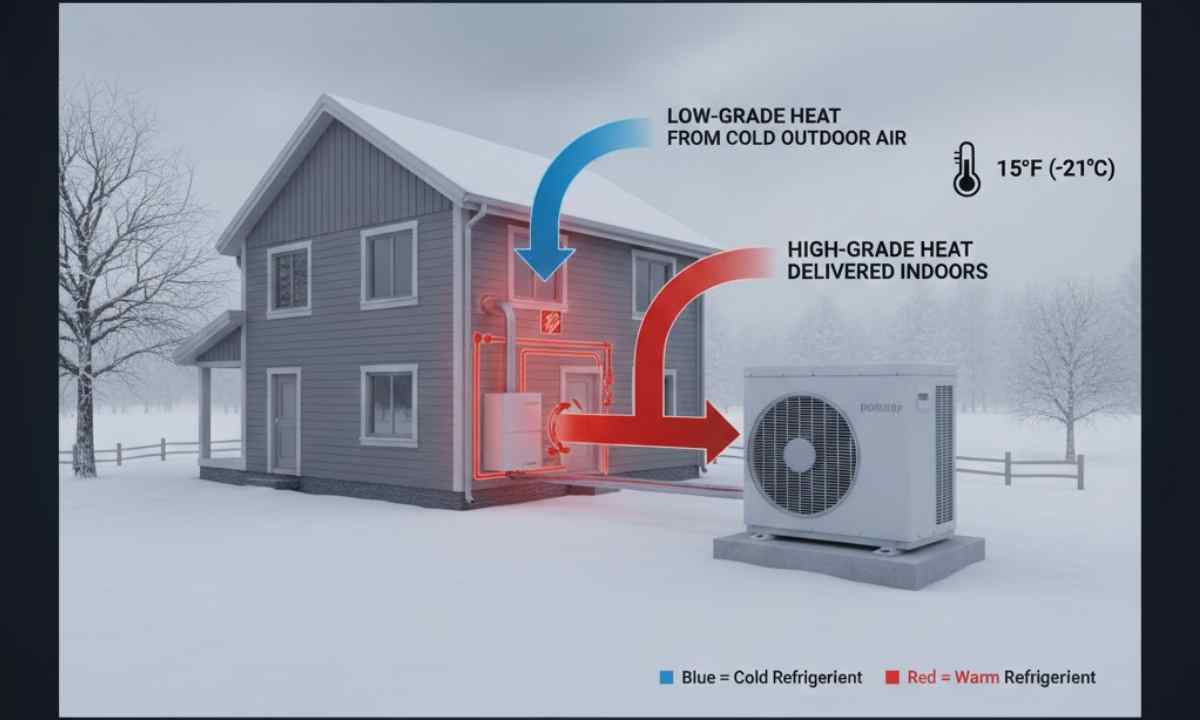
Before getting into efficiency numbers or winter complaints, it helps to understand what an air-source heat pump is designed to do. In Sussex County, heat pumps can perform very well, but only when their operating strengths line up with local conditions and the home itself. This section explains how heat pumps actually work, where they excel in Delaware winters, and where homeowners tend to notice limits.
How a Heat Pump Heats a Home
Yes, a heat pump heats your home by moving heat rather than creating it. An air-source heat pump pulls heat energy from the outdoor air and transfers it indoors using electricity. Even cold air contains usable heat, as long as temperatures stay within a workable range.
Modern heat pumps are very different from the systems many homeowners remember from decades ago. Older models struggled as temperatures dropped, ran inefficiently, and relied heavily on backup heat. Newer cold-climate designs use improved compressors, refrigerants, and controls that allow them to extract heat more efficiently across a wider temperature range. That difference matters in Sussex County, where winters are often moderate with short cold snaps rather than sustained deep freezes.
Efficiency in Mild and Moderate Winter Conditions
Yes, heat pumps are most efficient in mild to moderate winter weather. This is where Sussex County conditions often work in their favor.
HSPF2 is the current efficiency rating used for heat pumps. It stands for Heating Seasonal Performance Factor, and it measures how much heat the system delivers over an entire heating season compared to the electricity it uses. A higher HSPF2 rating means better seasonal efficiency, not just performance on a single cold day.
Efficiency peaks when outdoor temperatures stay above freezing. During these stretches, a heat pump can deliver steady warmth while using significantly less energy than systems that generate heat directly. Many homeowners see the biggest efficiency benefits during late fall, early winter, and early spring, when temperatures sit comfortably in that range for weeks at a time.
Cold Weather Limitations Homeowners Notice
Yes, heat pumps can feel different during cold snaps, even when they are working correctly. This is where expectations matter.
As temperatures drop, several things can happen. Defrost cycles may activate to clear ice from the outdoor unit, briefly reversing operation. Auxiliary heat may engage to support the system when outdoor conditions push it past its most efficient range. Neither issue means the system is failing, but both can change how the heat feels and how much electricity the system uses.
Another common surprise is air temperature. Heat pumps deliver warm air, but it is typically cooler than furnace air. Because the system runs longer to maintain temperature, some homeowners interpret this steady airflow as “cool,” even though the home is holding the set temperature.
Common Heat Pump Complaints From Homeowners
Yes, these complaints are common and usually tied to expectations rather than defects. Understanding them helps avoid unnecessary frustration.
-
Feels like cool air. Heat pump supply air is often warm rather than hot. The system relies on continuous operation instead of short, intense heating bursts, which can feel unfamiliar at first.
-
Runs constantly. Longer runtimes are normal and often indicate efficient operation, especially during moderate weather. Unlike furnaces, heat pumps are designed to maintain temperature gradually rather than cycle on and off frequently.
-
Winter electric bill spikes. Electric bills can rise during colder months, particularly when auxiliary heat engages during freezing nights. This is most noticeable in homes with higher heat loss or limited insulation.
These performance characteristics explain why heat pumps work exceptionally well in some Sussex County homes and struggle in others. The next section looks at how furnaces behave under the same conditions, and why some homeowners still prefer them during winter.
How Furnaces Perform in Sussex County Homes
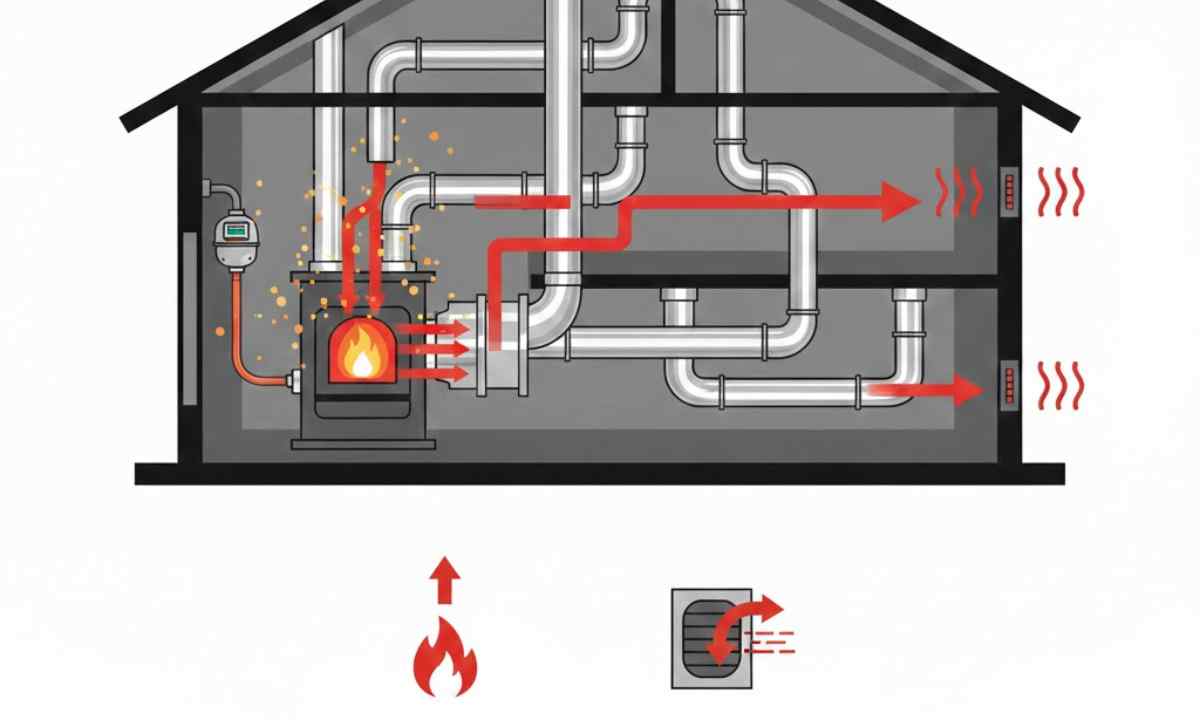
After understanding how heat pumps behave, it becomes clear why many Sussex County homeowners still rely on furnaces. Furnaces are built for one purpose: delivering consistent heat output when outdoor conditions turn uncomfortable. In homes that lose heat quickly or experience noticeable January cold snaps, that reliability often outweighs efficiency metrics.
How Furnaces Produce Heat
Yes, furnaces produce heat by generating it directly rather than transferring it. Gas and propane furnaces create heat through combustion, while electric furnaces use resistance heating. In both cases, the system raises the temperature of the air itself before distributing it throughout the home.
This direct heat generation explains why furnace air feels hotter at the vents. Furnaces deliver short bursts of high-temperature air, which can warm rooms faster after a setback or door opening. For many homeowners, especially those in draft-prone homes, that immediate warmth feels more reassuring during cold weather.
Performance During Cold Snaps
Yes, furnaces maintain stable heat output regardless of outdoor temperature. Their performance does not taper as temperatures fall.
When Sussex County sees overnight freezes or multi-day cold spells in January, a furnace continues delivering the same level of heat. There is no efficiency threshold where output suddenly drops or backup heat needs to take over. This consistency is why furnaces often feel more predictable during cold snaps, particularly in older homes or properties exposed to wind.
Fuel Availability in Sussex County
Yes, fuel type directly affects operating cost and planning. In Sussex County, furnaces commonly run on natural gas, propane, or oil, depending on location and infrastructure.
Natural gas is more common in developed areas and tends to offer the most stable pricing over time. Propane is widely used in rural and coastal parts of the county, but costs can fluctuate based on market conditions and delivery schedules. Oil systems still exist in older homes, though price volatility and supply logistics make budgeting less predictable. These differences influence not just monthly costs, but how confidently homeowners can plan for winter expenses.
Common Furnace Complaints From Homeowners
Yes, these concerns are common and usually reflect system characteristics rather than failures. Knowing what to expect helps homeowners avoid misinterpreting normal behavior as a problem.
-
Rising fuel costs. Fuel prices often increase during colder months, especially during periods of high demand. Extended cold snaps can amplify this effect, even when the system is running efficiently.
-
Dry indoor air. Furnaces can reduce indoor humidity during winter, leading to dry skin, sinus irritation, or static buildup. This is typically addressed with humidity control rather than changes to the heating system.
-
Uneven room temperatures. High-temperature air delivery can expose airflow or duct balance issues. Some rooms may heat quickly while others lag, particularly in homes with long duct runs or older ductwork.
These furnace characteristics explain why many Sussex County homeowners prioritize dependable heat output during winter. The next section compares how furnaces and heat pumps feel in daily use, focusing on comfort differences homeowners notice rather than technical specifications alone.
Comfort Differences Homeowners Notice Right Away
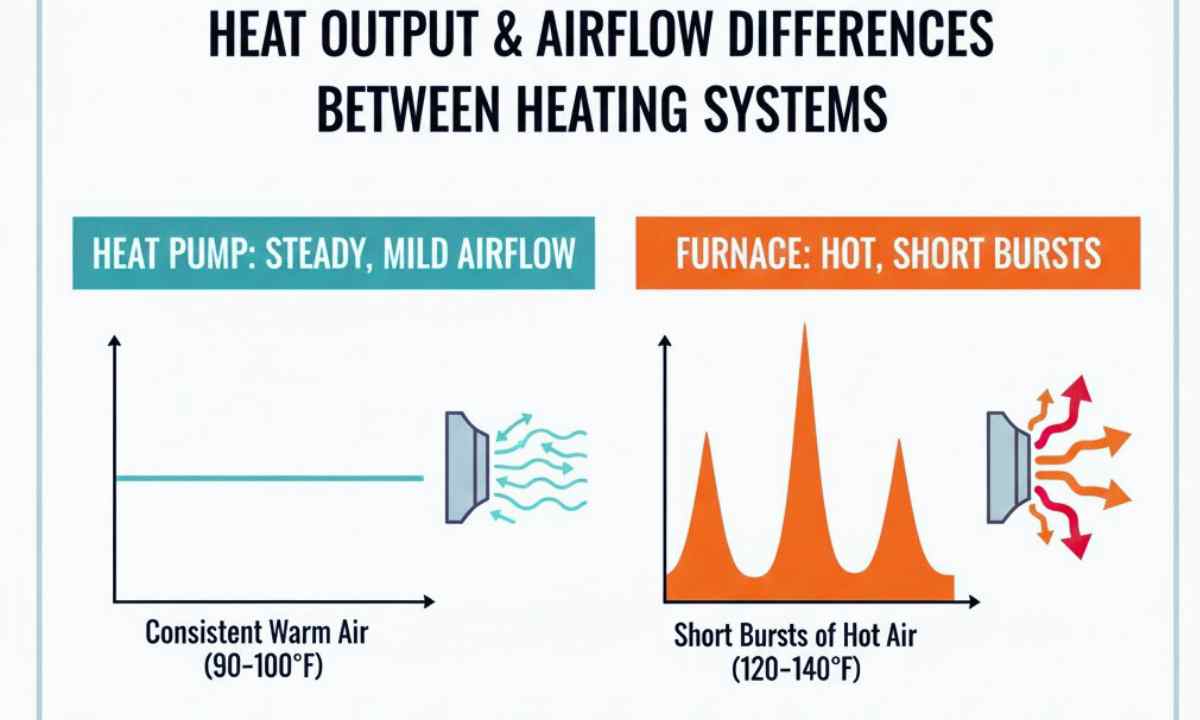
Once a heating system starts running, comfort becomes personal very quickly. In Sussex County homes, comfort complaints rarely come down to equipment quality alone. They usually come from how heat is delivered, how long the system runs, and how evenly warmth reaches different rooms. These differences show up immediately, often within the first few weeks of use.
Heat Output and Air Feel
Yes, heat pumps and furnaces feel different even when the thermostat shows the same temperature. That difference is one of the most common surprises for homeowners switching systems.
Furnaces deliver hotter air in short bursts, which can feel more noticeable when you walk past a vent or come home to a cold house. Heat pumps deliver warm air at a lower temperature over longer periods, which can feel less dramatic but more steady. In Sussex County’s damp winter air, that steady heat can sometimes feel cooler than expected, even when the home is holding temperature.
This is why thermostat numbers do not tell the whole story. Comfort depends on airflow, humidity, and how evenly heat is distributed throughout the home, not just the set point on the wall.
Runtime, Noise, and Cycling
Yes, runtime patterns are one of the first comfort differences homeowners notice. Each system is designed to operate differently, and those patterns stand out once winter settles in.
Heat pumps tend to run for longer stretches to maintain temperature during mild and moderate weather. That steady operation often feels quieter indoors, but it can make some homeowners worry the system never shuts off. Furnaces cycle on and off more clearly, delivering heat in shorter bursts that feel more familiar in older Sussex County homes.
Outdoor noise can also factor in. Heat pumps rely on an outdoor unit that operates during the heating season, which means some sound outside the home on cold days. In coastal or wind exposed areas, that outdoor operation is more noticeable than it would be inland.
Temperature Consistency Across Rooms
Yes, uneven room temperatures usually point to airflow issues, not system failure. This is where comfort complaints most often originate.
Duct leakage, long duct runs, and poor airflow balance can cause some rooms to heat faster than others. In many Sussex County homes, especially older construction, furnaces can temporarily mask these issues by pushing hotter air. Heat pumps, with their steady output, tend to reveal them more clearly.
Load calculations matter here. When a system is properly sized and matched to the home’s layout and heat loss, room to room consistency improves regardless of whether the system is a furnace or a heat pump. Without that step, even high quality equipment can struggle to deliver even comfort.
These comfort differences explain why homeowners often feel strongly about one system over another. The next section looks at how those comfort patterns translate into real heating costs in Sussex County, and why some winter bills rise faster than expected.
Operating Cost Comparison in Sussex County, DE
Operating cost is where heating decisions start to feel real, especially once winter utility bills arrive. In Sussex County, heating costs are driven less by the label on the equipment and more by how often the system runs, when it works hardest, and how quickly heat escapes the home. Those factors explain why two similar homes on the same street can see very different winter bills.
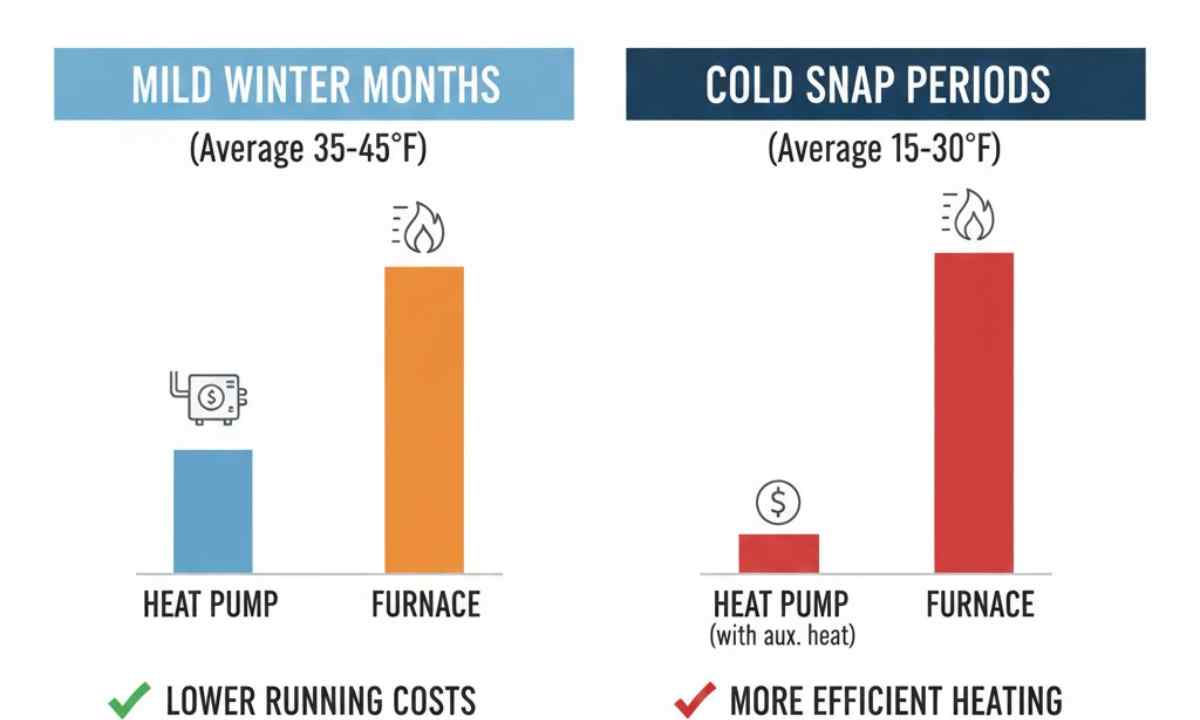
Electricity vs Gas Costs in Delaware
Yes, operating cost depends more on usage patterns than fuel type alone. Electricity and gas prices in Delaware establish the baseline, but how and when a system uses energy has a bigger impact on what shows up each month.
Heat pumps rely on electricity and tend to run longer during mild and moderate weather. Furnaces burn gas, propane, or oil in shorter, higher output cycles. During weeks when daytime temperatures stay above freezing, heat pumps often operate efficiently and keep costs steady. When overnight temperatures drop and systems work harder, the cost difference can shrink or flip depending on the home.
Seasonal variability matters here. Sussex County winters often swing between mild stretches and sudden cold snaps, especially in January. That variability is why a December bill can look manageable while a January bill jumps, even though the thermostat setting never changed.
Real-World Monthly Cost Scenarios
Yes, monthly heating costs can shift significantly based on weather and home condition. Looking at common scenarios helps set realistic expectations instead of relying on averages.
-
Mild winter month. When daytime temperatures remain above freezing and nights dip only briefly, heat pumps often run efficiently for long stretches. In these months, homeowners frequently see smoother, more predictable electric bills, particularly in homes with good insulation and air sealing.
-
Cold snap month. When Sussex County experiences several freezing nights in a row, heating demand rises quickly. Heat pumps may rely more on auxiliary heat, increasing electricity use, while furnaces consume more fuel to maintain indoor comfort. This is when many homeowners see the sharpest increase in heating costs.
-
Poor versus good insulation. Two identical systems can produce very different bills based on how well the home holds heat. A well insulated home loses heat slowly and needs less energy to stay comfortable. A drafty home forces any system to run longer, regardless of fuel type, which magnifies costs during cold weather.
These scenarios show why operating cost is not a fixed number. It moves with weather patterns, insulation quality, and how efficiently heat stays inside the home.
Why Online Cost Calculators Often Mislead
Yes, many online cost calculators underestimate real winter expenses. They rely on simplified assumptions that rarely match Sussex County homes.
One common issue is ignoring auxiliary heat. Many calculators assume a heat pump runs at peak efficiency all winter without accounting for backup heat use during freezing nights. Another blind spot is duct loss. Heat lost through aging or unsealed ductwork never reaches living space but still appears on the bill. Most calculators also ignore home heat load, which includes insulation levels, ceiling height, window quality, and air leakage.
Because of these gaps, calculators often produce numbers that look appealing but fail to reflect real-world outcomes. Understanding how your home actually uses energy provides far more reliable guidance than generalized online estimates.
The next section looks at what happens when homeowners replace an existing furnace with a heat pump, including which upgrades and costs tend to catch people off guard after installation.
Replacing a Furnace With a Heat Pump in Sussex County: What Changes and What Doesn’t
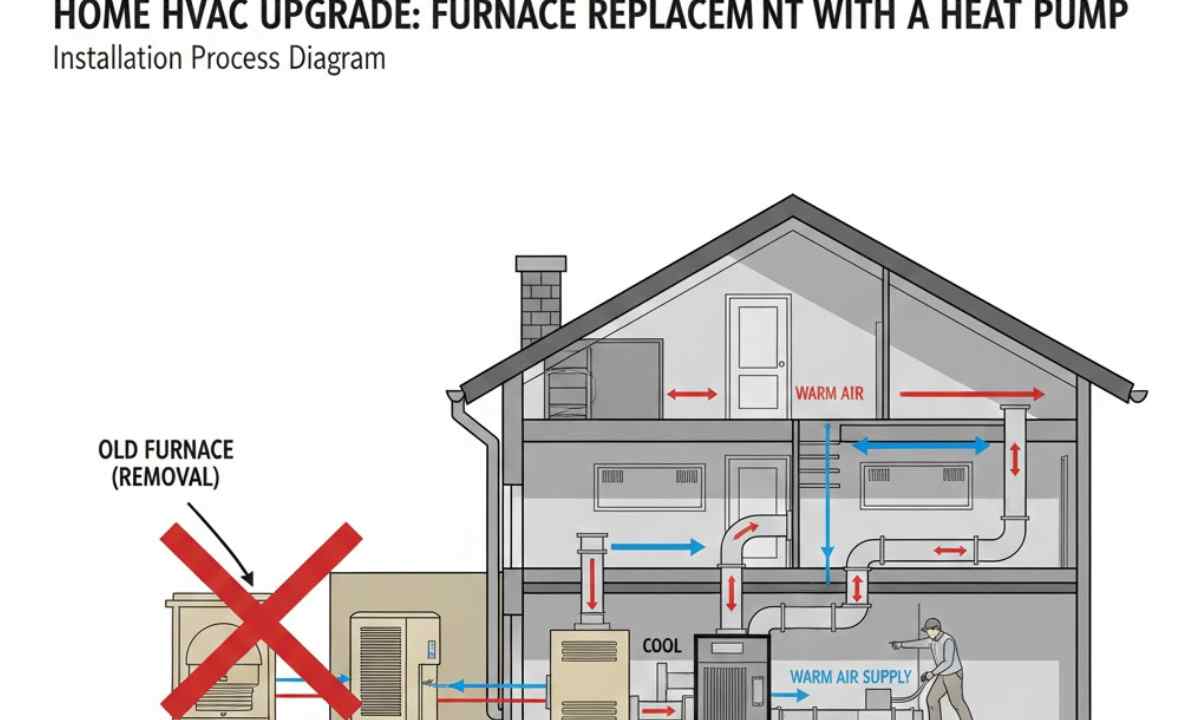
Replacing a furnace with a heat pump is one of the most common decisions Sussex County homeowners face once they start weighing efficiency against cold-weather reliability. In many homes, the transition is smooth. In others, it exposes issues that were easy to ignore with a furnace in place. Knowing what actually changes and what stays the same is what separates a confident upgrade from a frustrating one.
Can Existing Ductwork Be Reused?
Yes, existing ductwork can often be reused, but only if it is sealed, sized correctly, and in good condition. This is one of the most misunderstood parts of a furnace-to-heat-pump conversion.
Ducts work well when they can move enough air at lower temperatures without leaking heat along the way. Heat pumps rely on higher airflow to deliver steady warmth, so ductwork that functioned adequately with furnace heat may struggle if it is undersized or poorly sealed. In many Sussex County homes built decades ago, duct systems have aged, shifted, or been modified without proper sealing.
Ducts become a problem when rooms already heat unevenly or airflow feels weak at certain vents. In those cases, a heat pump tends to reveal comfort issues that a furnace previously masked with hotter air. Addressing duct improvements upfront often determines whether the upgrade feels like an improvement or a step backward.
Electrical Panel and Power Requirements
Yes, some homes require electrical upgrades when switching to a heat pump. This is also one of the most common surprises homeowners encounter.
Heat pumps run entirely on electricity, and auxiliary heat can significantly increase electrical demand during freezing nights. Homes with older electrical panels or limited available capacity may need upgrades to safely support the system. This is especially common in older Sussex County neighborhoods and rural properties where electrical infrastructure was not designed for modern electric heating loads.
What catches homeowners off guard is not the need for power, but when the issue surfaces late. Identifying electrical limitations early prevents rushed decisions, installation delays, and unexpected costs once work has already started.
Installation Timeline and Disruption
Yes, replacing a furnace with a heat pump is usually manageable, but it is not always quick. Understanding the process helps set realistic expectations.
In straightforward replacements, installing the indoor unit, outdoor unit, and refrigerant lines typically takes a few days. When duct modifications or electrical upgrades are involved, timelines can extend beyond that window. Most homeowners stay in their homes during installation, though short interruptions in heating may occur while systems are removed, connected, and tested.
Common regrets almost always trace back to skipped planning. Homeowners often wish they had evaluated duct conditions or electrical capacity before installation day. Taking time to address these factors upfront reduces disruption and leads to a more predictable outcome once the system is running.
This replacement reality explains why furnace-to-heat-pump conversions succeed easily in some Sussex County homes and struggle in others. The next section looks at installation cost, available incentives, and long-term value so these practical changes can be weighed against budget and planning decisions.
Installation Cost, Incentives, and Long-Term Value

Once performance and comfort are clear, cost becomes the deciding factor for many homeowners. In Sussex County, installation cost is not just the price of the equipment. It reflects how well the system fits the home, what upgrades are required to support it, and how those choices affect reliability and operating costs over time. Looking at cost through that lens helps avoid short-term savings that create long-term headaches.
Heat Pump Installation Cost Factors
Yes, heat pump installation cost varies widely based on the home, not just the system. Several factors consistently drive what homeowners actually pay.
-
Equipment sizing. Heat pumps must be sized to the home’s true heat loss, not just square footage. Insulation levels, ceiling height, window quality, and layout all matter. In Sussex County’s mixed housing stock, from newer developments to older coastal and rural homes, proper sizing often determines whether a system feels efficient or strained.
-
Electrical upgrades. Some homes need panel upgrades or additional circuits to support a heat pump and its auxiliary heat. This is especially common in older neighborhoods and rural areas where electrical service was not designed for modern electric heating loads. Electrical readiness can have as much impact on total cost as the heat pump itself.
-
Home readiness. Duct condition, airflow balance, and space for indoor and outdoor equipment all affect labor and material costs. Homes that need duct sealing or airflow corrections usually perform better long term, but those improvements add to upfront investment.
Furnace Installation Cost Factors
Yes, furnace installation cost is often more predictable, but it still depends on existing infrastructure. Furnaces rely on fuel delivery and venting systems that may or may not be ready for replacement equipment.
-
Fuel infrastructure. Homes with existing natural gas service usually face fewer surprises. Propane is common in rural and coastal parts of Sussex County and can introduce variability tied to delivery schedules and market pricing. Oil systems, still present in some older homes, often come with additional planning and cost considerations.
-
Venting and safety. Proper venting is critical for combustion safety. Older venting systems may need updates to meet current standards when equipment is replaced. These changes are mandatory and factor directly into installation cost and timeline.
Rebates and Tax Credits (What Matters, What Doesn’t)
Yes, incentives can reduce upfront cost, but they should support the decision, not drive it. This is where many homeowners get pulled off course.
Federal tax credits and utility incentives can make heat pumps more affordable, particularly when replacing older systems. These programs are useful, but they change frequently and often depend on efficiency ratings, installation details, or income thresholds.
What matters more is long-term value. A system that qualifies for incentives but struggles with comfort, reliability, or winter operating costs rarely delivers a good return. Incentives work best when they reinforce a system choice that already makes sense for the home and local climate. Many homeowners choose to speak with a contractor who specializes in professional heating installation in Sussex County to confirm load calculations, duct condition, and system compatibility before committing. When installation decisions balance upfront savings with realistic expectations for performance, maintenance, and lifespan, homeowners tend to be satisfied years after the install.
Maintenance, Lifespan, and Reliability in Coastal Delaware
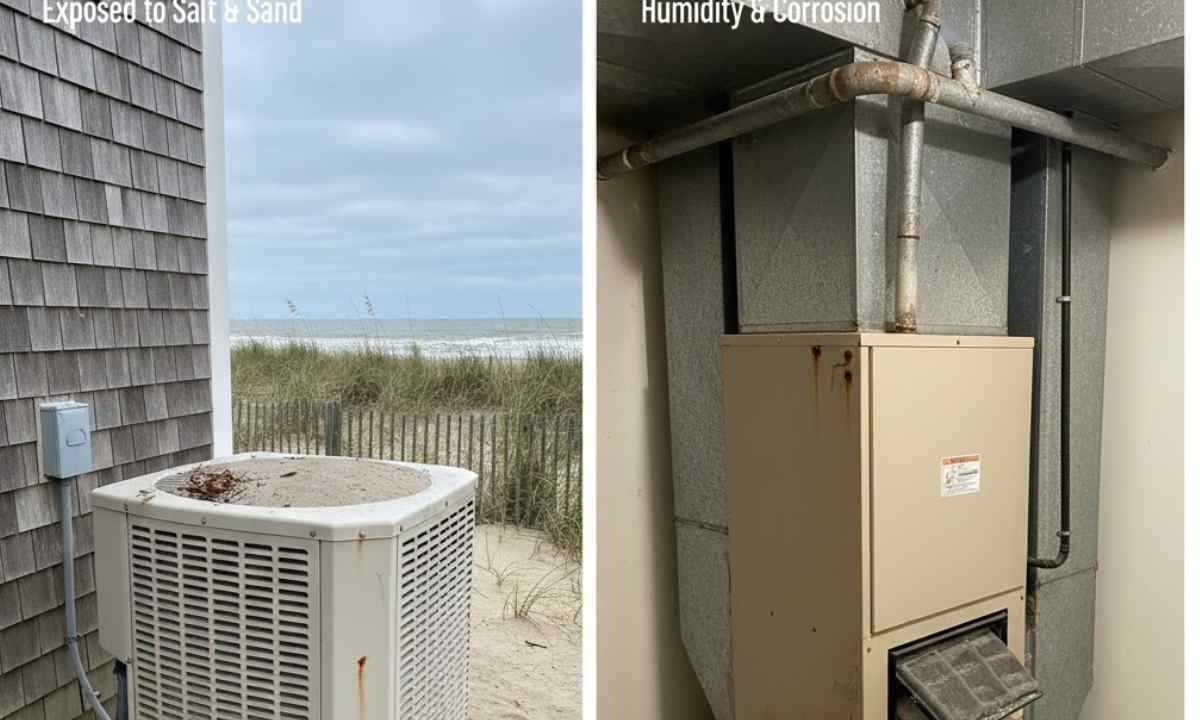
Once a system is installed, long-term satisfaction depends less on the first winter and more on how well it holds up over time. In Sussex County, coastal conditions play a real role in maintenance needs and equipment reliability. Salt air, humidity, and temperature swings affect heating systems differently, and understanding those effects helps homeowners set realistic expectations about lifespan and upkeep.
Heat Pump Maintenance and Lifespan
Yes, heat pumps require consistent maintenance to stay reliable in coastal environments. An air-source heat pump relies on an outdoor unit year round, which means it is more exposed to weather than a furnace.
Salt air and moisture can accelerate corrosion on outdoor coils and electrical components, especially in homes closer to the coast. This does not mean heat pumps are short lived. In most cases, early failures are tied to neglected maintenance rather than coastal exposure alone. Keeping coils clean, ensuring proper airflow, and protecting components from buildup helps preserve efficiency and extend usable life.
Annual service matters more for heat pumps because they operate in both heating and cooling modes. Regular inspection of refrigerant levels, controls, and airflow reduces strain during winter cold snaps and summer heat. With consistent care, modern heat pumps can deliver a dependable lifespan, even in coastal Delaware, but skipped maintenance shortens that window quickly.
Furnace Maintenance and Lifespan
Yes, furnaces are generally durable, but they come with safety-driven maintenance requirements. Gas and propane furnaces depend on combustion, which makes regular inspection essential.
Combustion safety checks ensure burners, venting, and exhaust systems are operating correctly. In older Sussex County homes, venting systems may be original or altered over time, increasing the importance of annual inspections. These checks protect both system performance and household safety.
Heat exchanger condition is one of the biggest factors in furnace lifespan. Over years of heating cycles, metal fatigue can lead to cracks that affect efficiency and safety. Maintenance helps catch early warning signs, but once a heat exchanger is compromised, replacement is often the safest path forward. Furnaces that are inspected regularly and operated within proper airflow limits tend to last longer than those pushed beyond their design.
Maintenance history often matters more than system type when it comes to reliability. A well maintained heat pump can outlast a neglected furnace, and vice versa. Thinking about upkeep as part of ownership helps avoid surprises years down the line.
These maintenance and reliability differences bring the decision full circle. The final section pulls everything together to help determine which system best fits your home, priorities, and long-term plans in Sussex County.
Which System Fits Your Home in Sussex County?
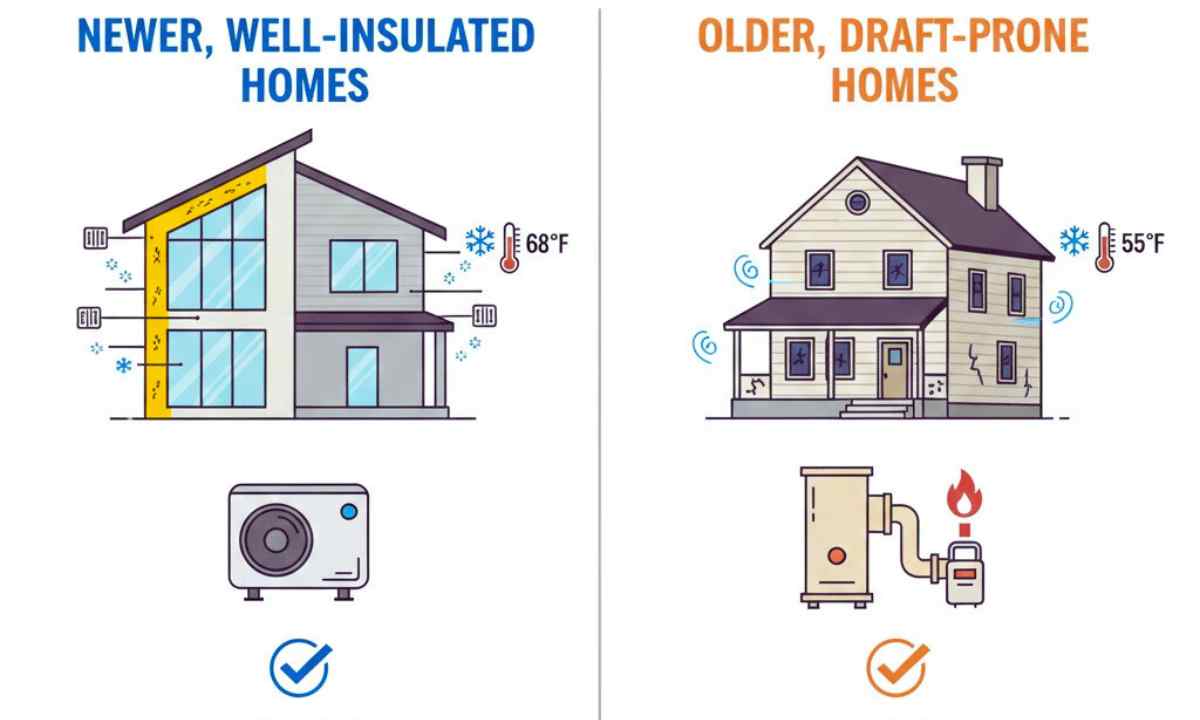
By this point, the differences between heat pumps and furnaces should feel clearer. The remaining question is not which system is better in general, but which one fits your specific home. In Sussex County, age of construction, insulation quality, and how long you plan to stay all play a bigger role than brand or efficiency labels.
Homes That Usually Do Better With Heat Pumps
Yes, heat pumps tend to work best in homes that are newer and tightly built. These homes support the way heat pumps are designed to operate.
Newer construction typically includes better insulation, tighter air sealing, and more consistent duct layouts. That allows a heat pump to maintain steady indoor temperatures without fighting constant heat loss. When the building envelope holds heat well, the system can run efficiently through most of the winter without relying heavily on auxiliary heat.
Tight building envelopes also reduce drafts and temperature swings, which improves comfort with lower temperature supply air. In these homes, homeowners often appreciate the even warmth and lower shoulder-season operating costs that heat pumps deliver.
Homes That Usually Do Better With Furnaces
Yes, furnaces often perform better in older homes with higher heat loss. This is especially true in parts of Sussex County where housing stock predates modern insulation standards.
Older homes tend to lose heat faster through walls, windows, and air leaks. In these conditions, a furnace’s ability to deliver hotter air helps offset that loss and maintain comfort during cold snaps. Furnaces also recover indoor temperature more quickly after doors open or thermostats drop, which can matter in draft-prone layouts.
Homes with higher heat loss profiles often feel more predictable with furnace heat, even if operating costs are higher during winter. In these cases, reliability and comfort usually outweigh efficiency gains on paper.
Homes That Benefit Most From Dual Fuel Systems
Yes, dual fuel systems often make the most sense for homes that sit on the climate edge. Sussex County fits that description well.
Dual fuel systems combine a heat pump for mild and moderate weather with a furnace for colder conditions. This setup allows the home to benefit from heat pump efficiency when temperatures are favorable, then switch to furnace heat during freezing nights without sacrificing comfort.
Long-term homeowners often see the most value from this approach. Over time, dual fuel systems balance operating costs, comfort, and reliability across a wide range of winter conditions. For homeowners planning to stay put, that flexibility can be more valuable than committing fully to one system or the other.
This home-fit perspective sets up the final decision. The closing section pulls these factors together and outlines practical next steps for choosing the right heating system in Sussex County.
Common Questions Sussex County Homeowners Ask
These are the questions Sussex County homeowners consistently ask once they get past surface-level comparisons. They come up after the first winter bill, during cold snaps in January, or when a system feels different than expected. The answers below focus on how these systems actually behave in local homes, not on marketing claims or national averages.
Are Heat Pumps Worth It in Delaware?
Yes, heat pumps can be worth it in Delaware when the home supports efficient operation. Sussex County’s winter pattern includes many days where temperatures stay above freezing, which gives heat pumps room to operate efficiently. In well-insulated homes, that efficiency can translate into real savings and steady comfort. In drafty homes or without backup heat, performance and satisfaction tend to drop during colder stretches.
Do Heat Pumps Use a Lot of Electricity in Winter?
Yes, heat pumps can use more electricity during winter, especially during Sussex County cold snaps. During mild weeks, electricity use is often modest. When overnight temperatures stay below freezing and auxiliary heat engages, electric usage rises quickly. This pattern is why some homeowners see manageable bills in December and noticeably higher ones in January, even without changing thermostat settings.
What Is Cheaper to Run in Sussex County, a Heat Pump or a Furnace?
Neither option is always cheaper across the entire winter. In Sussex County, heat pumps often cost less to run during mild and moderate weeks, while furnaces can feel more predictable during freezing periods, particularly in homes with higher heat loss. Over a full season, operating cost depends on weather patterns, insulation quality, and how long cold snaps last.
Can I Replace My Furnace With a Heat Pump?
Yes, many Sussex County homes can replace a furnace with a heat pump, but it is not always a direct swap. Existing ductwork, electrical capacity, and airflow need to be evaluated first. Homes with older ducts or limited electrical service may require upgrades to avoid comfort issues after installation. Planning these details early prevents surprises once the system is installed.
Why Does My Heat Pump Feel Cold?
Yes, heat pump air can feel cooler even when the system is working correctly. Heat pumps deliver warm air at a lower temperature over longer periods, unlike furnaces that produce hotter air in short bursts. In Sussex County’s damp winter conditions, that steady airflow can feel cool to the touch even though the home is maintaining the set temperature.
Is a Dual Fuel System Worth It in Delaware?
Yes, dual fuel systems are often a strong fit for Delaware’s variable winter climate. They allow the home to rely on a heat pump during mild weather and switch to furnace heat during colder periods. For Sussex County homeowners planning to stay long term, this flexibility often delivers the best balance of efficiency, comfort, and reliability without committing fully to one system’s limitations.
These questions usually come up right before homeowners are ready to make a decision. The final section pulls everything together and outlines practical next steps for choosing the right heating system for your home in Sussex County.
What Sussex County Homeowners Should Remember Before Choosing a Heating System
-
Home performance matters more than system type. Insulation quality, air sealing, duct condition, and heat loss patterns have a bigger impact on comfort and cost than whether you choose a heat pump or a furnace.
-
Sussex County’s climate rewards conditional decisions, not absolutes. Mild winter stretches favor heat pump efficiency, while cold snaps expose the limits of poorly matched systems. Homes that sit between those extremes often benefit most from flexible solutions.
-
Heat pumps work best in tight, well-prepared homes. Newer construction and well-insulated homes allow heat pumps to deliver steady comfort and lower shoulder-season operating costs without heavy reliance on backup heat.
-
Furnaces perform more predictably in high heat-loss homes. Older or draftier homes often feel more comfortable with furnace heat during January cold spells, even if efficiency is lower on paper.
-
Dual fuel systems balance efficiency and reliability. For long-term homeowners, combining a heat pump with a furnace often provides the most consistent comfort across Sussex County’s variable winter conditions.
-
Upfront cost is not the best decision metric. Installation quality, electrical readiness, duct performance, and proper load calculations have more influence on long-term satisfaction than rebates or equipment price alone.
-
Most regret comes from skipped evaluation, not wrong technology. Homes that receive proper load calculations and system planning before installation are far less likely to experience comfort issues or unexpected winter bills.
These takeaways reflect how heating systems actually perform in Sussex County homes, not how they are marketed. When decisions are guided by real conditions instead of assumptions, outcomes become far more predictable.